
Maarten Muys
Dr. ir. Maarten Muys holds a masters degree in Environmental Technology and a PhD in Bioengineering. He specialized in sustainable microbial protein production and microalgae cultivation. Maarten has amassed over 12 years of experience in algae cultivation and has published numerous paper on the topic.
Not all astaxanthin is the same. Two products can carry the same label and the same milligram number, yet deliver very different purity, stability, and value. If you want the best astaxanthin, the source and the way it is made matter more than the price on the bottle.
Astaxanthin is a red-orange carotenoid and one of the strongest antioxidants found in nature. It comes mainly from the freshwater microalga Haematococcus pluvialis. People take it for skin, eye, and general antioxidant support, and brands add it to supplements and cosmetics. Demand keeps rising, and so does the number of low-quality products on the shelf.
This guide gives you nine clear tips to judge quality fast. Use it whether you are a consumer picking a supplement or a brand choosing an ingredient supplier. By the end you will know what separates premium natural astaxanthin from the rest, and what to check before you buy.
The 9-point checklist at a glance
- Choose natural, not synthetic.
- Confirm the source is Haematococcus pluvialis microalgae.
- Check the production technology.
- Look at extraction method and purity.
- Check stability and the molecular form.
- Verify the real astaxanthin dose.
- Ask for clinical evidence and safety status.
- Look for third-party certifications.
- Pick a sustainable, transparent producer.
1. Choose natural, not synthetic
Pick natural astaxanthin every time. It is the form your body recognises and the form used in almost all safety and efficacy studies.
Natural astaxanthin comes from microalgae and has been part of the food chain for a very long time. Synthetic astaxanthin is made from petrochemicals in a multi-step chemical process. The two are not identical. Synthetic production creates a mix of molecular shapes, and about half of those shapes do not occur in nature. Synthetic astaxanthin was developed mainly for animal feed and has not been through the same human safety review as the natural form.
The label will not always say "synthetic." Watch for very low prices and vague sourcing. If a product does not name microalgae as the source, treat that as a warning sign. You can read more in our guide to natural versus synthetic astaxanthin.
2. Confirm the source
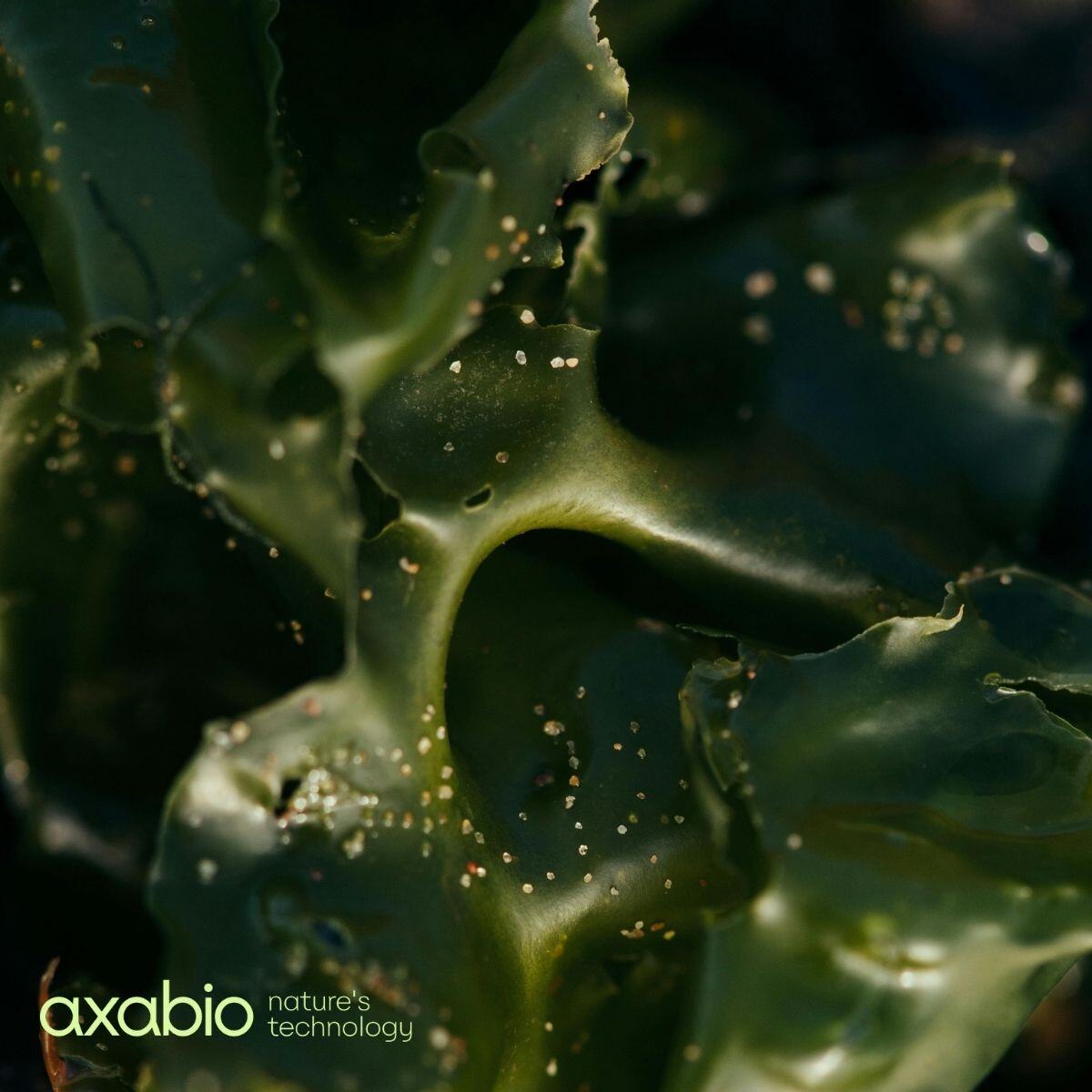
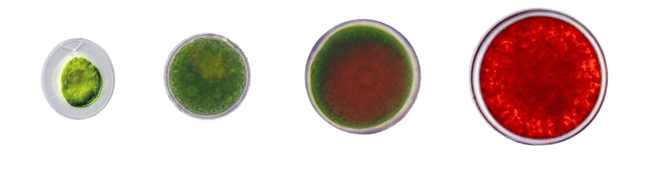
The best natural astaxanthin comes from the microalga Haematococcus pluvialis. It is the richest natural source and the one behind most published research.
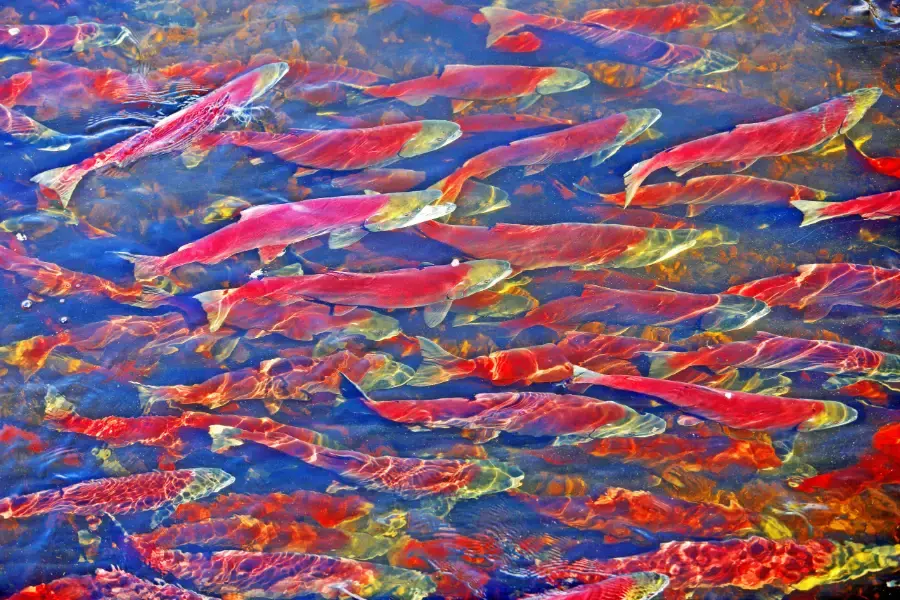
Astaxanthin appears in several places in nature, including microalgae, yeast, krill, shrimp, and salmon. Krill, shrimp, and salmon get their astaxanthin from microalgae further down the food chain, so their levels are low and less consistent. A yeast called Xanthophyllomyces dendrorhous can also produce astaxanthin, but it is often genetically modified and its molecular structure differs from the microalgae form.
For a supplement, microalgae is the source you want. It gives the highest concentration and the structure backed by science. If you are comparing astaxanthin against krill oil, remember that krill oil is mostly an omega-3 product with only a small amount of astaxanthin along for the ride. To understand the sources in more detail, see what astaxanthin is and where it comes from.
3. Check the production technology
How the microalgae is grown decides the purity and stability of the final product. This is the single biggest quality difference between suppliers, and most labels never mention it.
Astaxanthin production has moved through four generations of technology. Each step improved how much light reaches the algae, which drives growth and astaxanthin content while keeping contamination out.
| Generation | System | Light reaching the culture | Contamination risk |
|---|---|---|---|
| Gen 1 | Open ponds | About 3% | High |
| Gen 2 | Indoor cultivation | About 8% | Medium to high |
| Gen 3 | Closed tubular photobioreactors | About 27% | Medium |
| Gen 4 | Continuous flat-panel photobioreactors | Up to 100% | Very low |
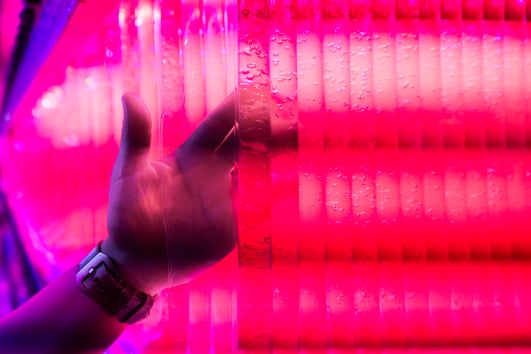
Open ponds sit outdoors and are exposed to dust, other organisms, and pollutants. Closed systems protect the culture and produce a cleaner result. Flat-panel photobioreactors, the fourth generation, spread the culture in a thin layer so light reaches almost all of it. That gives high biomass, high astaxanthin content, and very low contamination risk.
axabio® uses patented fourth-generation flat-panel photobioreactor technology to produce natural astaxanthin. You can see how the technology developed in our article on how astaxanthin production evolved from open ponds to flat panels.
4. Look at extraction method and purity
Once the algae is harvested, the astaxanthin has to be pulled out. The extraction method affects purity, safety, and what ends up in your body.
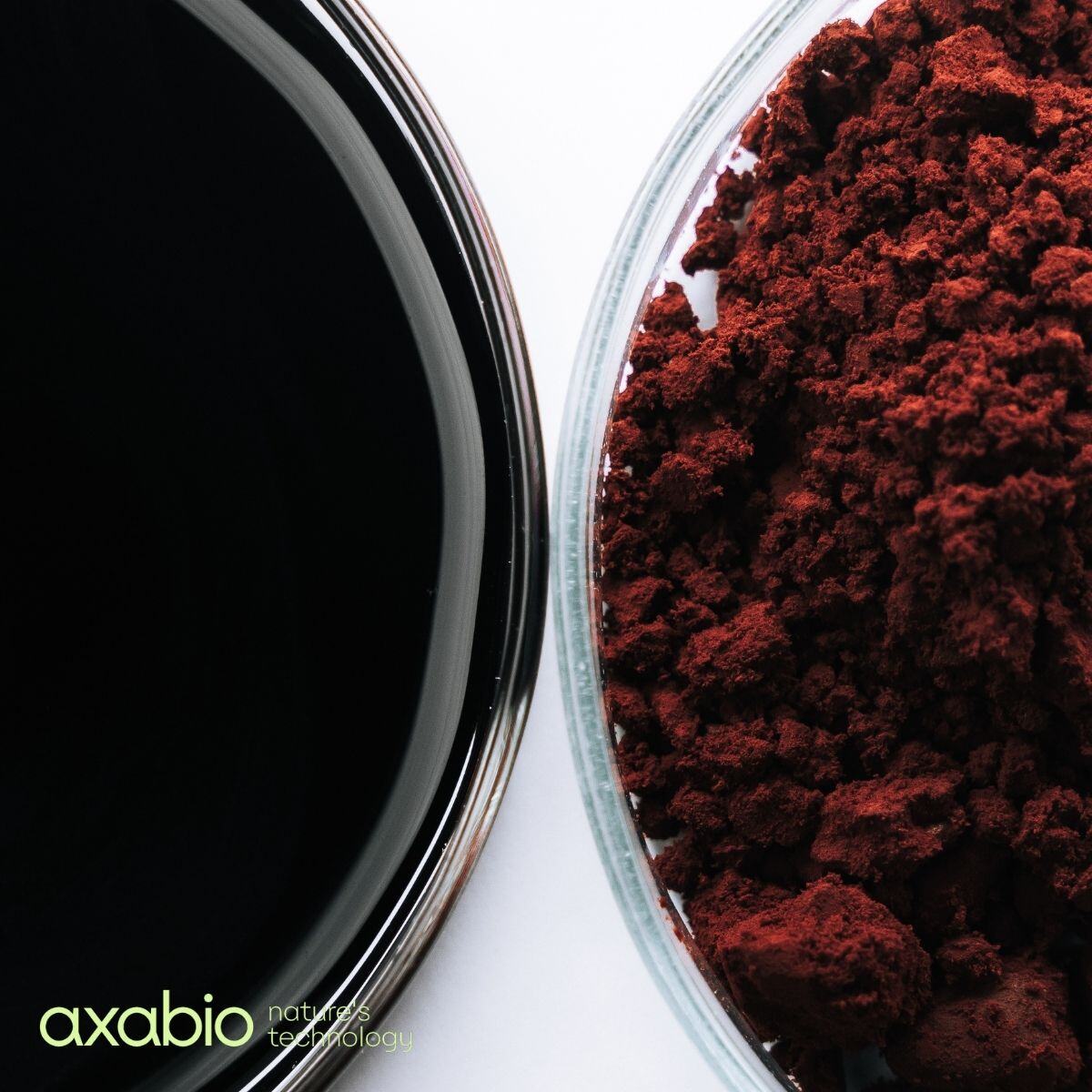
The cleanest method is supercritical CO₂ extraction. It uses pressurised carbon dioxide instead of chemical solvents, so no solvent residue is left behind. Cheaper products often use chemical solvents that can leave traces in the final oleoresin.
Purity also depends on the growing conditions. Algae can absorb heavy metals and toxins from its environment, so the equipment and water quality matter. Look for products made with food-grade equipment in a controlled, closed system. A good supplier will share a certificate of analysis showing heavy-metal and contaminant testing. If a brand cannot show you one, keep looking.
5. Check stability and the molecular form
Astaxanthin degrades easily. It reacts to light, heat, and oxygen, and it can lose potency long before the expiry date if it is not stabilised well. Stability is what keeps the dose on the label the same as the dose in the capsule.
Two structural details drive stability and absorption:
- Esterified form. In natural astaxanthin from microalgae, the molecule is bound to fatty acids. This esterified form is more stable and absorbs well because the fats help your gut take it in.
- Trans configuration. Natural astaxanthin is mostly in the trans shape, which is more stable and better absorbed than the cis shapes that dominate synthetic material.
You cannot always see this on a label, so it points back to the source. A premium natural producer using clean extraction and good formulation will protect the trans, esterified molecule. axabio® focuses its production on the purity and stability of the natural molecule, which is what keeps a product working through its full shelf life.
6. Verify the real astaxanthin dose
Read the label for the actual astaxanthin content, not the total weight of the oil or the oleoresin. This is where many products mislead buyers.
An oleoresin might be 5% or 10% astaxanthin, so a large oil weight can still contain a small active dose. The number you want is the milligrams of astaxanthin itself. Most human studies use 4 to 12 mg of astaxanthin per day. Some products go higher, up to 24 mg, though more is not automatically better.
Two label checks:
- Find the line that says "astaxanthin" in milligrams, not "algae oil" or "oleoresin" in milligrams.
- Match the dose to the research range rather than the biggest number on the shelf.
If a label only gives you an oil weight and no clear astaxanthin figure, assume the active dose is low.
7. Ask for clinical evidence and safety status
The best astaxanthin is backed by published research and clear regulatory status. Quality suppliers make this easy to find.
Natural astaxanthin from Haematococcus pluvialis has GRAS status in the United States, which means it has been reviewed and treated as safe for its intended use. It has also been assessed by food-safety authorities in Europe, with defined intake guidance. Follow the dose on the label and speak to a health professional if you take medication or are pregnant.
For a supplement, look for a brand that cites real studies rather than vague claims. For an ingredient supplier, ask for a research dossier you can use to support your own product. You can browse a curated set of trials in our overview of the clinical research behind astaxanthin.
8. Look for third-party certifications
Certifications are independent proof that a producer does what it claims. They turn "trust us" into verified fact.
Look for some or all of the following:
- Manufacturing quality: GMP and ISO 22000 or FSSC 22000.
- Purity and sourcing: Non-GMO verification and a certificate of analysis.
- Diet and lifestyle: vegan, kosher, and halal.
- Sustainability: recognised environmental or social standards.
More certifications mean more independent checks on the product you are buying. A serious astaxanthin supplier will list them clearly and provide the documents on request.
9. Pick a sustainable, transparent producer
The best astaxanthin comes from a producer that protects both quality and the planet. Sustainability is now a real quality signal, not a marketing extra.
Microalgae is a renewable crop. Grown well, it uses carbon dioxide, needs no farmland that could grow food, and can run on recycled water and clean energy. A transparent producer will tell you where and how the astaxanthin is made and will back it with independent verification.
In 2026, axabio® became the first natural astaxanthin producer to earn certified B Corporation status, recognised in particular for low energy and water use relative to the purity it achieves. That kind of verified standard is what you want behind a premium ingredient. Astaxanthin is studied across many areas of health, including its well-researched role in astaxanthin benefits for skin, so the ingredient inside your product should meet the same standard as the claims on the front.
How to choose the best astaxanthin: a summary
The best astaxanthin is natural, sourced from Haematococcus pluvialis, grown in a clean closed system, extracted without solvents, stable, correctly dosed, backed by research, certified, and made by a transparent producer. Run any product through the nine tips above and the quality gap becomes obvious fast.
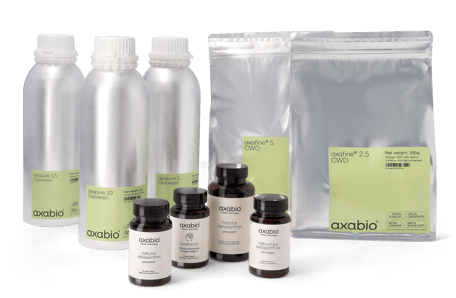
If you are a brand or formulator, the same nine points define the supplier you want behind your product. axabio® produces natural astaxanthin in Belgium using patented flat-panel photobioreactor technology and solvent-free extraction, with the purity, stability, and documentation to support your claims. Talk to our team to request a sample or a technical data sheet.

References
- Ambati RR, Phang SM, Ravi S, Aswathanarayana RG. Astaxanthin: sources, extraction, stability, biological activities and its commercial applications, a review. Marine Drugs. 2014;12(1):128-152. https://pmc.ncbi.nlm.nih.gov/articles/PMC3917265/
- Capelli B, Bagchi D, Cysewski GR. Synthetic astaxanthin is significantly inferior to algal-based astaxanthin as an antioxidant and may not be suitable as a human nutraceutical supplement. Nutrafoods. 2013;12(4):145-152. https://link.springer.com/article/10.1007/s13749-013-0051-5
- Capelli B, Talbott S, Ding L. Astaxanthin sources: suitability for human health and nutrition. Functional Foods in Health and Disease. 2019;9(6):430-445. doi:10.31989/ffhd.v9i6.584. https://ffhdj.com/index.php/ffhd/article/view/584
- Mercke Odeberg J, Lignell Å, Pettersson A, Höglund P. Oral bioavailability of the antioxidant astaxanthin in humans is enhanced by incorporation of lipid based formulations. European Journal of Pharmaceutical Sciences. 2003;19(4):299-304. https://www.sciencedirect.com/science/article/abs/pii/S0928098703001350
- Brendler T, Williamson EM. Astaxanthin: how much is too much? A safety review. Phytotherapy Research. 2019;33(12):3029-3044. https://onlinelibrary.wiley.com/doi/10.1002/ptr.6514
- EFSA Panel on Nutrition, Novel Foods and Food Allergens (NDA). Safety of astaxanthin for its use as a novel food in food supplements. EFSA Journal. 2020;18(2):5993. https://efsa.onlinelibrary.wiley.com/doi/10.2903/j.efsa.2020.5993
- U.S. Food and Drug Administration. GRAS Notices Inventory: GRN 294, Haematococcus pluvialis extract containing astaxanthin esters (FDA had no questions, 2010); GRN 580 (2015). https://www.cfsanappsexternal.fda.gov/scripts/fdcc/?set=GRASNotices