
Emma Hanegraef
Emma holds a MSc in Cellular and Genetic Engineering and has been passionate about the science behind skincare and health since the age of 12. As an experienced formulator, she translates complex scientific concepts into accessible knowledge, helping you make informed choices about your formulas.
Free radicals attack your cells every second of the day. Your best defense against them is an antioxidant. Some antioxidants are far stronger than others, so the most powerful antioxidant you can find will do the most work for you.
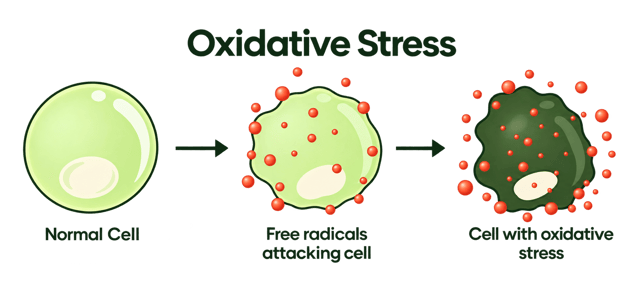
Free radicals form when you breathe, digest food, and exercise. Sunlight, pollution, alcohol, and stress push the numbers higher. Each free radical is an unstable molecule missing an electron, and it will steal one from a healthy cell to complete itself. That single theft starts a chain reaction that can harm your skin, your eyes, and the DNA inside your cells.
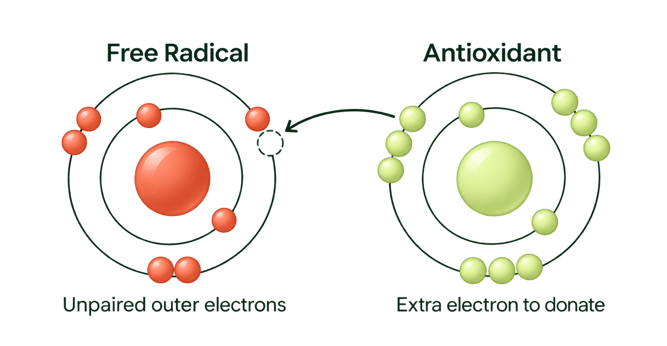
Antioxidants stop that chain. They hand over an electron safely and calm the free radical down before the damage spreads. Your body makes some antioxidants on its own, and you get more from food and supplements. But not every antioxidant is equal.
This guide explains what free radicals do inside your body, how antioxidants shut them down, and which molecule ranks as the most powerful antioxidant in nature. You will also learn how to choose a version your body can actually absorb and use.
What are free radicals, and why should you care?
Free radicals are molecules with an unpaired electron. Electrons prefer to travel in pairs, so a molecule missing one becomes unstable and highly reactive. To fix itself, a free radical grabs an electron from the nearest molecule. That molecule then becomes a free radical too, and it does the same thing to its neighbor. The reaction spreads fast.
Scientists group most of these molecules under two names: reactive oxygen species, or ROS, and reactive nitrogen species, or RNS. You do not need to memorize the chemistry. The point is simple. When these reactive molecules build up faster than your body can handle them, they start to break things.
Where free radicals come from
Your own body is the biggest source. Every cell burns oxygen to make energy, and that process leaks free radicals as a byproduct. Your immune cells also release free radicals on purpose to kill bacteria and viruses. This is normal and useful.
The trouble comes from the extra load outside your control. These external sources add far more than your body was built to handle:
- Sunlight and UV rays
- Air pollution and smog
- Cigarette smoke
- Alcohol
- Fried and heavily processed food
- Very intense exercise
- Ongoing psychological stress
Each of these pushes your free radical count up. On a normal day your body copes fine. Over years of high exposure, the balance can tip.
Free radicals are not the enemy you think
Here is the part most articles skip. Free radicals are not purely harmful. At normal levels they help your cells send signals, and they help your immune system fight infection. Researchers describe them as both useful and harmful, depending on the amount. At healthy levels they keep you alive. In excess they cause damage.
So the goal is not to remove every free radical. That would harm you. The goal is balance. You want enough antioxidants on hand to keep free radicals from building up too far. Health sits at the balance point, and oxidative stress begins when free radicals outweigh your antioxidant defense.
What free radicals actually do to your body
When free radicals outnumber your antioxidants, you reach a state called oxidative stress. This is the tipping point where damage starts to build up across your cells.
Oxidative stress harms three main targets inside every cell:
- Lipids, the fats in your cell membranes. Free radicals strip electrons from these fats in a process called lipid peroxidation. Your cell walls stiffen and leak.
- Proteins, the workers of the cell. Oxidized proteins lose their shape and stop doing their job.
- DNA, your genetic code. Free radicals damage DNA, which can lead to faulty cell behavior over time.
The damage is cumulative. A single free radical is not a problem, and your body repairs small hits all the time. The concern is decades of a tilted balance, where repair cannot keep pace with the damage. This slow buildup is one of the reasons your skin, your energy, and your recovery change as you get older.
Large research reviews link long-term oxidative stress to many of the conditions people fear most with age. These include heart disease, type 2 diabetes, neurodegenerative conditions such as Alzheimer's, and some cancers. Oxidative stress does not cause these conditions on its own, but it is a common thread that runs through many of them.
Signs your body may be under oxidative stress
Oxidative stress is not something you can feel directly, and only a doctor can test for it. Still, researchers connect a high, sustained free radical load with tiredness, slower recovery after exercise, and faster visible skin aging. If your lifestyle carries several of the sources listed above, your load is likely higher than it needs to be. Athletes feel this too. Hard training creates a surge of free radicals in working muscle, which is one reason astaxanthin has been studied for exercise recovery.
Your skin
Your skin takes the heaviest hit because it faces the sun and the air all day. UV light drives free radical formation in the skin, which breaks down collagen and elastin, the proteins that keep skin firm. The visible result is fine lines, loss of firmness, and uneven tone. This is why antioxidants appear in so many serums and creams. You can read more about astaxanthin for skin and how it supports the skin barrier.
Your eyes
Your eyes are also exposed to light and use a large amount of oxygen, which makes them a hotspot for oxidative stress. Damage to the cells of the retina and lens adds up slowly over a lifetime. A few antioxidants can actually reach eye tissue and help defend it, which is covered in our guide to astaxanthin and eye health.
Oxidative stress and inflammation
Oxidative stress and inflammation feed each other. Free radical damage triggers an inflammatory response, and inflammation produces more free radicals in turn. Left unchecked, this loop sits behind many long-term health complaints. Breaking the loop is one reason antioxidants matter so much, as we explain in our piece on oxidative stress and inflammation.
How antioxidants stop free radicals
An antioxidant is any molecule that can give an electron to a free radical without becoming dangerous itself. It satisfies the free radical, ends the chain reaction, and stays stable afterward. In plain terms, the antioxidant is damaged instead of your cell.
Your body runs two lines of defense.
The first line is made inside you. Your cells produce their own antioxidant enzymes, with names like superoxide dismutase, catalase, and glutathione. These handle the everyday load without any effort from you.
The second line comes from your diet. Vitamin C, vitamin E, beta-carotene, and a large family of plant compounds all act as antioxidants. You get them from fruit, vegetables, nuts, and other whole foods.
Here is the catch. Your internal supply drops as you get older, and modern life adds free radicals faster than a poor diet can offset. That gap is why dietary antioxidants, and sometimes targeted supplements, earn their place.
Why more is not always better
It is tempting to think that if antioxidants are good, then huge doses must be better. Research does not support that idea. Your body relies on a working balance between free radicals and antioxidants, and flooding it with very high doses of isolated, synthetic antioxidants can upset that balance instead of helping it. Some large trials of single high-dose vitamins found no benefit, and in a few cases a small rise in risk. The sensible approach is steady support from a varied diet and a well-made supplement, not mega-doses of one pill.
What makes the most powerful antioxidant?
Not all antioxidants are equal. To rank as the most powerful antioxidant, a molecule needs to do several jobs well:
- Neutralize singlet oxygen, one of the most damaging reactive molecules
- Scavenge a wide range of free radicals, not only one type
- Stop lipid peroxidation inside cell membranes
- Stay stable and never turn into a pro-oxidant that causes harm itself
Most antioxidants are good at one or two of these tasks. A rare few do all of them. That short list is where astaxanthin sits. If you want the full breakdown of how it earns the title of most potent antioxidant, we cover the science in a dedicated guide.
Meet astaxanthin
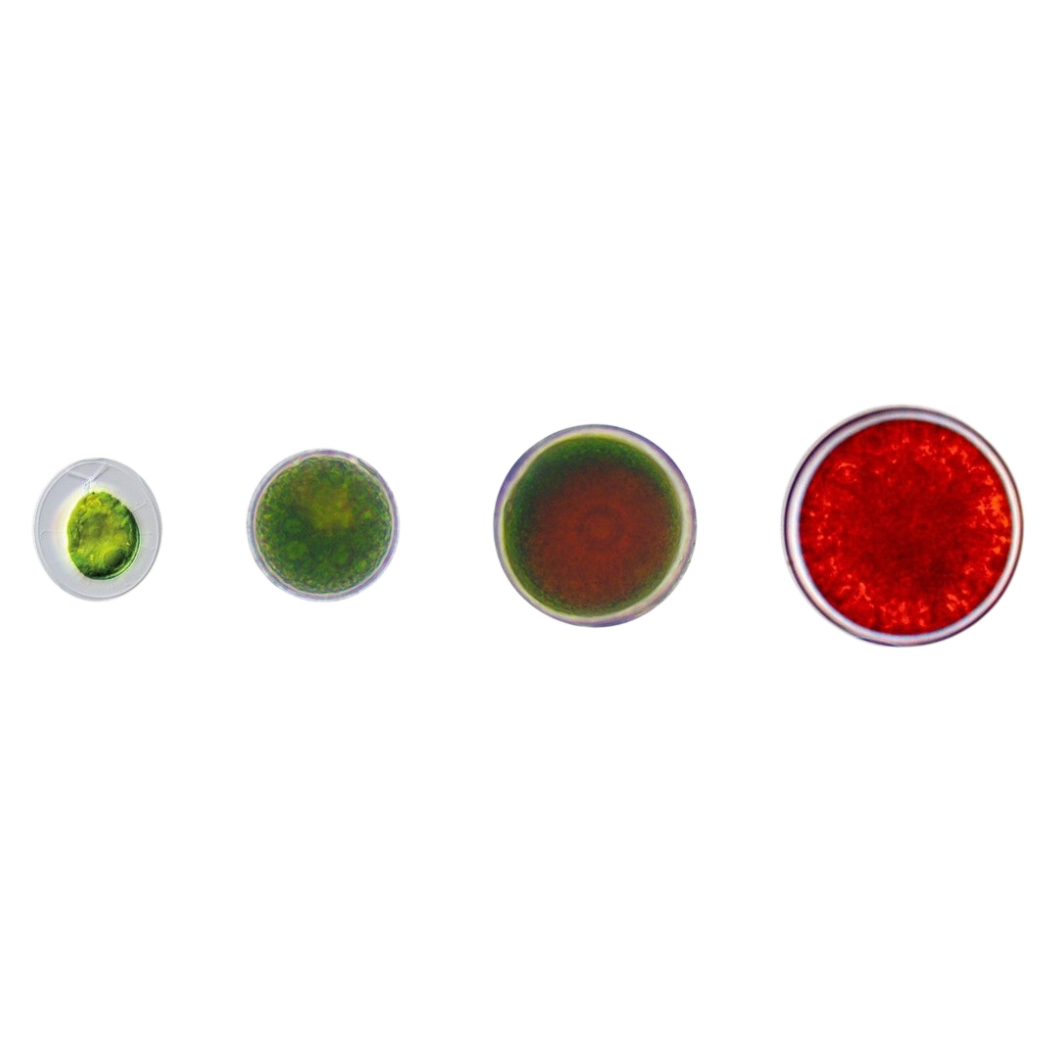
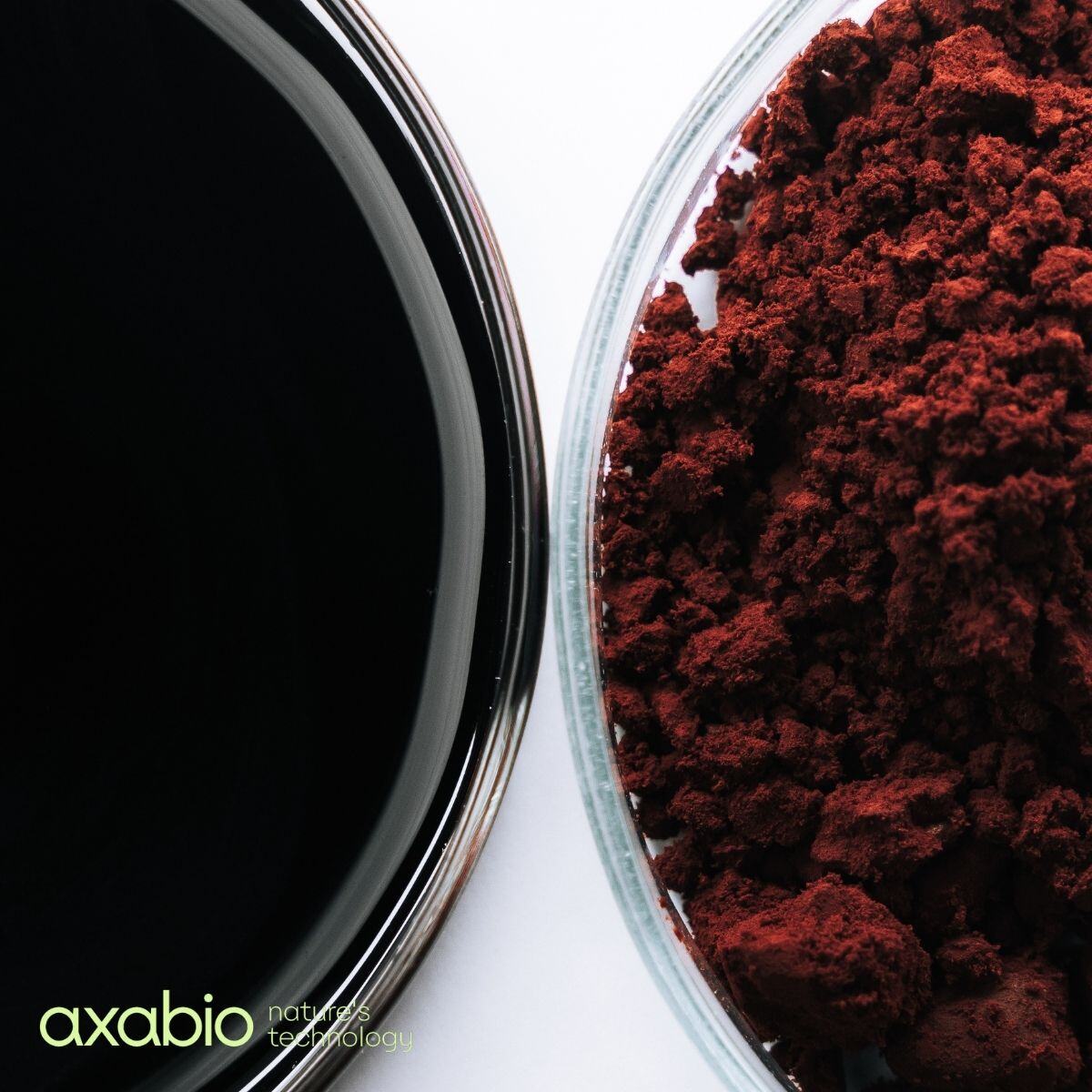
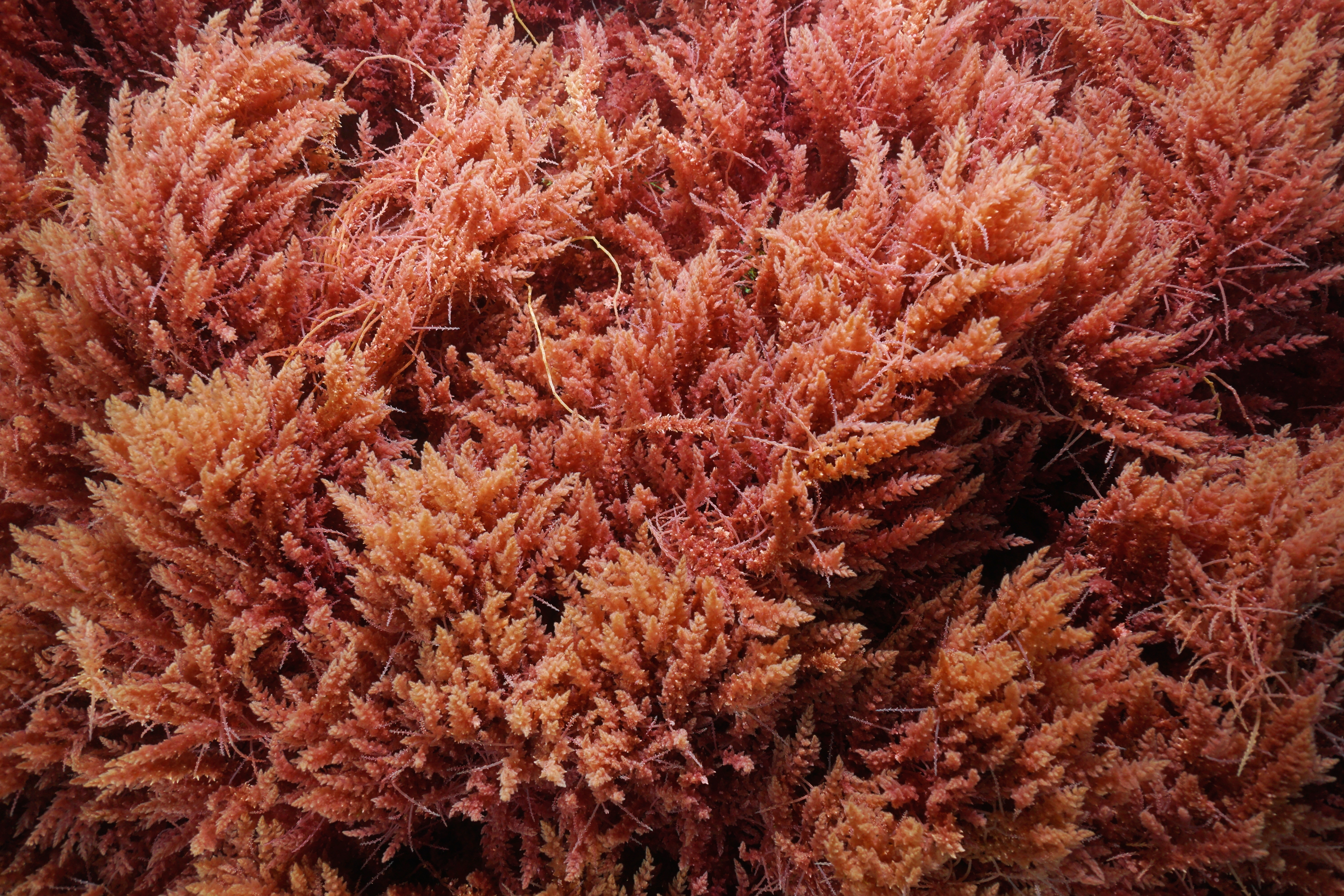
Astaxanthin is a deep red pigment produced by a microalga called Haematococcus pluvialis. The algae makes it as a survival shield against harsh sunlight and stress. It is the same pigment that gives salmon, shrimp, and flamingos their pink-red color, because those animals eat the algae or the creatures that fed on it.
The algae tells the story well. When Haematococcus pluvialis faces bright light or runs low on nutrients, it stops swimming, forms a hard shell, and floods itself with astaxanthin until it turns from green to deep red. That red pigment is the shield that keeps the cell alive under stress. The same shield is what you take when you choose a natural astaxanthin supplement.
In laboratory tests, astaxanthin has repeatedly outperformed the antioxidants most people know. One widely cited study measured how well common antioxidants neutralize singlet oxygen and found astaxanthin far ahead of the others.
| Compared with | Astaxanthin measured stronger by |
|---|---|
| Vitamin C | 6,000× |
| Coenzyme Q10 (CoQ10) | 770× |
| Green tea catechins | 550× |
| Vitamin E | 100× |
| Alpha-lipoic acid | 75× |
| Beta-carotene | 5× |
Read those numbers carefully. They describe one specific lab test, singlet oxygen quenching. They do not mean astaxanthin is 6,000 times healthier than an orange. Even so, across several types of testing, astaxanthin ranks among the strongest antioxidants ever measured. One review of 27 common antioxidants placed it first for this kind of quenching.
Why its shape makes it different
Astaxanthin's strength comes from its structure. Most antioxidants work in either the watery part of a cell or the fatty part, but not both. Astaxanthin is long enough to stretch across the whole cell membrane, so it guards the inner and outer surface at the same time.
It also crosses barriers that block many other nutrients, including the blood-brain barrier and the blood-retinal barrier. That means it can reach tissues like your brain and your eyes. And unlike some antioxidants that can turn into pro-oxidants and cause damage at high doses, astaxanthin has not shown this behavior in studies.
Antioxidant strength is only half the story
A high lab score does not guarantee a benefit in your body. This is the honest part that supplement labels rarely mention. What you actually get from an antioxidant depends on three more things: how well you absorb it, how stable it is, and how pure it is.
Absorption. Astaxanthin is fat-soluble, so it absorbs far better when you take it with a meal that contains fat. On an empty stomach, much of it goes to waste.
Stability. Astaxanthin is delicate. Light, heat, and oxygen can degrade it before it ever reaches you. A product that looks fine on the shelf may hold far less active antioxidant than the label claims if it was made or stored poorly.
Purity and source. Natural astaxanthin from Haematococcus pluvialis is the form used in almost all human research. A synthetic version exists, made from petrochemicals, and it is not the same molecule in structure or performance. Synthetic astaxanthin is cheaper to make, which is why it turns up in low-cost products, often meant for animal feed rather than people. It has a different mix of molecular forms than the natural version, and human research has focused on the natural form for good reason. Natural is the form you want.
This is where the production method decides quality. Astaxanthin grown in open outdoor ponds is exposed to sun, weather, and contamination, which lowers purity and consistency. Astaxanthin grown in a closed, controlled system stays cleaner and more stable.
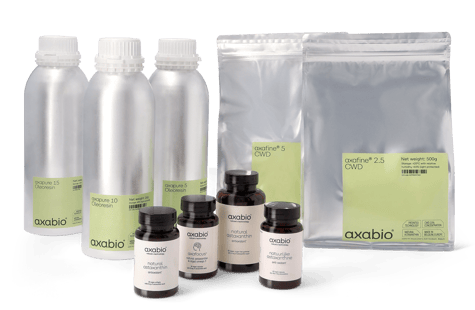
axabio® produces natural astaxanthin using a patented fourth-generation, flat-panel production system. The closed design protects the algae from contamination and delivers astaxanthin that ranks among the purest and most stable available. In 2026, axabio® became the first natural astaxanthin producer certified as a B Corporation, in part because this system uses less energy and water for the purity it reaches. You can see the full story of how our astaxanthin is produced and why the method matters.
How to get more antioxidants that work
You do not need a cabinet full of pills. You need a smart routine. Start with food, then add a targeted supplement if you want stronger support.
Eat colorful plants. Deeply colored fruit and vegetables carry the most antioxidants. Berries, spinach, kale, beetroot, red cabbage, and dark grapes are strong choices. Green tea, dark chocolate, and nuts add more.
Cut the sources you can control. Less smoking, less alcohol, less fried food, and good sun protection all lower your free radical load. Better sleep and lower stress help too.
Add a targeted antioxidant. This is where a natural astaxanthin supplement fits. It gives you one of the strongest antioxidants known in a small daily dose, which is hard to reach through food alone.
How to read an astaxanthin label
When you compare products, check these points:
- Natural, not synthetic. Look for Haematococcus pluvialis on the label. Avoid anything listed as synthetic astaxanthin.
- Active astaxanthin, not bulk oil. Some labels show the weight of the oil, not the active ingredient. A common amount in research is around 4 to 12 mg of active astaxanthin per day.
- Proof of stability and purity. A quality producer explains how the astaxanthin is grown and protected from light and oxygen.
- Third-party testing. Independent testing confirms what the label claims.
Common mistakes to avoid
- Buying on price alone. Cheap astaxanthin is often synthetic or low in active content.
- Taking it on an empty stomach. Without fat, you absorb far less.
- Expecting overnight results. Antioxidant support builds over weeks, not hours.
Give your cells a stronger defense
Free radicals never stop, so your antioxidant support should not either. axabio® natural astaxanthin gives you the most powerful antioxidant in nature, in a form built for purity and stability you can trust. Explore the axabio® range.
Free radicals are part of being alive, and you will never remove them all. You do not need to. What you need is enough antioxidant power to keep them in balance so the damage never builds too far. That balance starts with food and a cleaner daily routine. For stronger support, astaxanthin stands out as the most powerful antioxidant in nature, as long as you choose a natural, pure, and stable form your body can use.

References
- Lobo V, Patil A, Phatak A, Chandra N. Free radicals, antioxidants and functional foods: impact on human health. Pharmacognosy Reviews. 2010;4(8):118-126. PMC3249911
- Pizzino G, Irrera N, Cucinotta M, et al. Oxidative Stress: Harms and Benefits for Human Health. Oxidative Medicine and Cellular Longevity. 2017;2017:8416763. PMID 28819546
- Free radicals and their impact on health and antioxidant defenses: a review. PMC. 2025. PMC11760946
- Cleveland Clinic. Oxidative Stress. Health Library. my.clevelandclinic.org
- Bjelakovic G, Nikolova D, Gluud LL, Simonetti RG, Gluud C. Mortality in randomized trials of antioxidant supplements for primary and secondary prevention: systematic review and meta-analysis. JAMA. 2007;297(8):842-857. PMID 17327526
- EFSA Panel on Nutrition, Novel Foods and Food Allergens. Safety of astaxanthin for its use as a novel food in food supplements. EFSA Journal. 2020;18(2):e05993. doi.org/10.2903/j.efsa.2020.5993
- Bjørklund G, Gasmi A, Lenchyk L, et al. The Role of Astaxanthin as a Nutraceutical in Health and Age-Related Conditions. Molecules. 2022;27(21):7167. PMC9655540
- Nishida Y, Yamashita E, Miki W. Quenching activities of common hydrophilic and lipophilic antioxidants against singlet oxygen using a chemiluminescence detection system. Carotenoid Science. 2007;11:16-20. (Primary source for the singlet oxygen strength ratios.)
- Naguib YM. Antioxidant activities of astaxanthin and related carotenoids. Journal of Agricultural and Food Chemistry. 2000;48(4):1150-1154. doi.org/10.1021/jf991106k
- Goto S, Kogure K, Abe K, et al. Efficient radical trapping at the surface and inside the phospholipid membrane is responsible for highly potent antiperoxidative activity of the carotenoid astaxanthin. Biochimica et Biophysica Acta. 2001. (Mechanism: astaxanthin spanning the cell membrane.)
- Kidd P. Astaxanthin, cell membrane nutrient with diverse clinical benefits and anti-aging potential. Alternative Medicine Review. 2011;16(4):355-364.
- Ambati RR, Phang SM, Ravi S, Aswathanarayana RG. Astaxanthin: sources, extraction, stability, biological activities and its commercial applications, a review. Marine Drugs. 2014;12(1):128-152. (Natural vs synthetic, stability, sources.)
- Fakhri S, Abbaszadeh F, Dargahi L, Jorjani M. Astaxanthin: a mechanistic review on its biological activities and health benefits. Pharmacological Research. 2018;136:1-20.
- Davinelli S, Nielsen ME, Scapagnini G. Astaxanthin in skin health, repair, and disease: a comprehensive review. Nutrients. 2018;10(4):522. (Skin.)
- Brown DR, Gough LA, Deb SK, Sparks SA, McNaughton LR. Astaxanthin in exercise metabolism, performance and recovery: a review. Frontiers in Nutrition. 2018;4:76. (Exercise recovery.)
- Ma B, Lu J, Kang T, et al. Astaxanthin supplementation mildly reduced oxidative stress and inflammation biomarkers: a systematic review and meta-analysis of randomized controlled trials. Nutrition Research. 2021;99:40-50. (Oxidative stress and inflammation.)