

Emma Hanegraef
Emma holds a MSc in Cellular and Genetic Engineering and has been passionate about the science behind skincare and health since the age of 12. As an experienced formulator, she translates complex scientific concepts into accessible knowledge, helping you make informed choices about your formulas.
Most astaxanthin research has focused on men, athletes, and general aging. Women's health has stayed in the background. That gap matters, because oxidative stress sits at the center of many concerns women face, from egg quality to skin changes to the menopause transition.
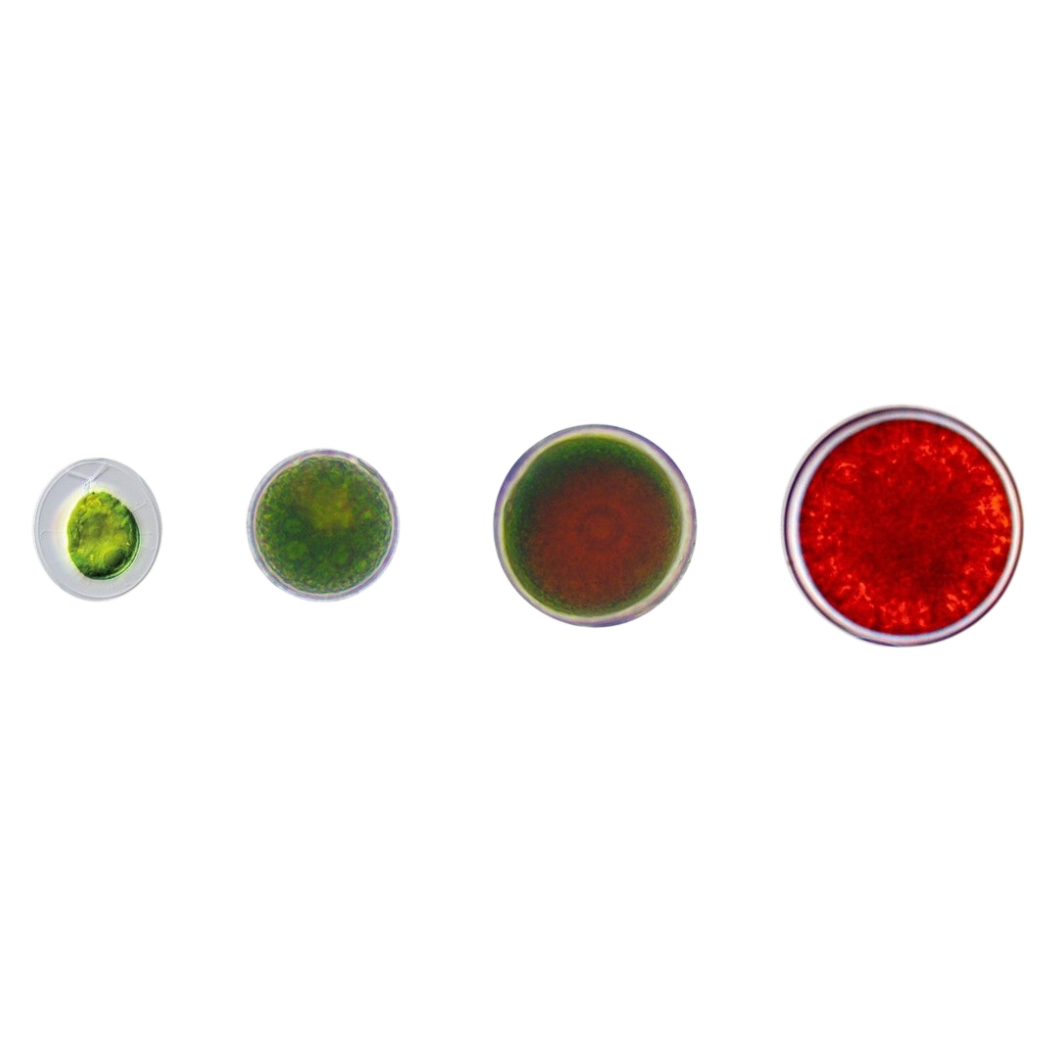
Astaxanthin is one of the strongest natural antioxidants we know of. It comes from the microalgae Haematococcus pluvialis, and researchers often call it the king of antioxidants because it outperforms vitamin C, vitamin E, and coenzyme Q10 in lab tests.
This guide covers what astaxanthin for women actually does, where the science is strong, where it is still early, and how to choose a supplement you can trust. You will also learn the right dose and who should be careful.
What is astaxanthin?
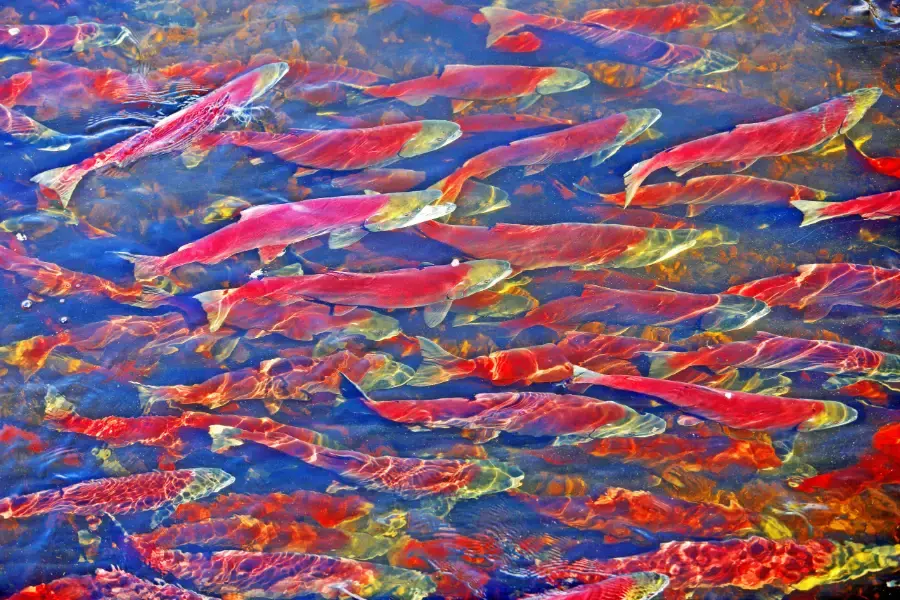
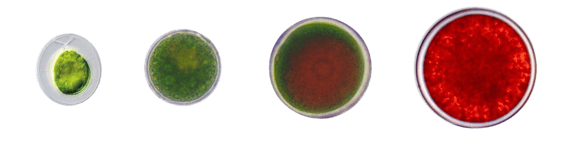
Astaxanthin is a red pigment in the carotenoid family, the same group that gives salmon, shrimp, and flamingos their color. The astaxanthin used in supplements comes from Haematococcus pluvialis, a freshwater microalgae that produces it to survive harsh conditions.
What sets it apart is its structure. The molecule spans the full width of a cell membrane. This lets it protect both the inside and the outside of your cells at once. Most antioxidants only reach one side.
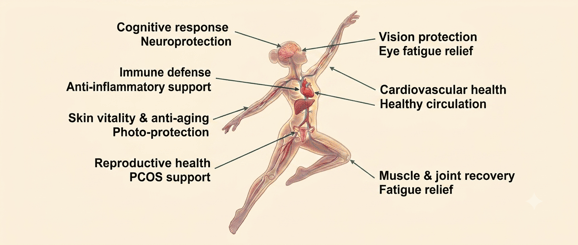
That single feature explains why astaxanthin keeps showing up across so many areas of women's health. Wherever oxidative stress causes damage, this molecule can help slow it down.
Want to dive deeper into how natural astaxanthin works? Learn about its cellular mechanisms, antioxidant properties, and why Haematococcus pluvialis-derived astaxanthin is the superior choice in our comprehensive guide on astaxanthin.
Why oxidative stress matters more for women
Oxidative stress happens when free radicals outnumber your body's antioxidant defenses. Left unchecked, it damages cells, DNA, and tissue. It speeds up aging and feeds chronic inflammation.
Several stages of a woman's life raise oxidative stress in specific ways:
- Egg cells are highly sensitive to free radical damage, and this damage increases with age.
- Conditions like PCOS and endometriosis are linked to higher oxidative stress and inflammation.
- The menopause transition shifts hormone levels and raises oxidative load across skin, bone, and heart.
Astaxanthin works on this exact problem. It neutralizes free radicals and calms inflammation through a cell pathway called Nrf2, which switches on your body's own antioxidant defenses. That is the thread connecting every benefit below.
1. Egg quality and fertility
This is the most promising area of astaxanthin research for women.
A 2024 randomized controlled trial gave 12 mg of astaxanthin per day to women with poor ovarian response who were preparing for IVF. After eight weeks, the astaxanthin group had more retrieved eggs, more mature eggs, and more high-quality embryos than the placebo group. They also showed lower inflammation and lower oxidative stress markers in their blood (Shafie et al., 2024).
A 2024 systematic review and meta-analysis reached a similar conclusion. Astaxanthin may improve assisted reproduction outcomes by improving oocyte quality and lowering oxidative stress in the reproductive organs. The authors were careful to note the studies were small and varied, so the evidence is encouraging rather than settled (Hashemi et al., 2024).
The mechanism makes sense. Egg cells rely on healthy mitochondria for energy, and mitochondria are easily damaged by free radicals. By reducing that damage, astaxanthin may help eggs mature and develop. Animal studies support this, showing higher egg maturation rates when astaxanthin is added (Yuan et al., 2025).
If you are trying to conceive, astaxanthin is not a treatment for infertility. See a fertility specialist for diagnosis. Astaxanthin is one supportive tool that fits alongside good nutrition and medical care.
2. PCOS support
Polycystic ovary syndrome affects roughly 1 in 10 women of reproductive age. It involves insulin resistance, inflammation, and oxidative stress, which is exactly where astaxanthin acts (Jabarpour et al., 2023).
Human studies are still limited, but the early results are interesting. In women with PCOS, astaxanthin supplementation has been shown to lower LDL cholesterol and a marker called Apo B, reduce oxidative stress markers, and raise total antioxidant capacity. Research also points to better oocyte and embryo quality in PCOS and endometriosis patients, linked to reduced cell stress pathways (Gharaei et al., 2022, for the egg and embryo quality; Jabarpour et al., 2024, for inflammation and ER stress).
These findings come from small trials, so treat them as a promising signal rather than proof. Astaxanthin may be a useful addition to a PCOS plan that already includes diet, movement, and your doctor's guidance.
3. Endometriosis and period pain
Endometriosis is a chronic inflammatory condition that causes pelvic pain and can affect fertility. Oxidative stress plays a clear role in it.
A 2025 meta-analysis looked at antioxidant supplements in women with endometriosis, including astaxanthin. The pooled results showed real reductions in pelvic pain, dysmenorrhea, and painful intercourse, along with lower oxidative stress markers in the blood (Zhong et al., 2025).
Two honest caveats apply. Astaxanthin was studied alongside several other antioxidants, so the benefit cannot be credited to astaxanthin alone. And the same analysis found no significant improvement in pregnancy rates. The takeaway is measured: antioxidants like astaxanthin may help with pain and inflammation, but they are not a fertility fix for endometriosis.
4. Skin elasticity, moisture, and fine lines
Skin is where many women first notice astaxanthin working, and the evidence here is solid.
A 2021 meta-analysis of human trials found that oral astaxanthin restored skin moisture and improved elasticity compared to placebo. It did not significantly reduce wrinkle depth on its own, which is an honest limit worth knowing (Zhou et al., 2021).
Other studies show stronger cosmetic results when you combine oral and topical use. One study in 30 women using 6 mg daily plus a topical application reported smoother crow's feet, smaller age spots, and better elasticity and texture over eight weeks.
Astaxanthin protects skin from the inside by reducing the free radical damage that UV light causes. This is not sunscreen and does not replace it. Think of it as added support for skin that faces daily sun and pollution.
5. Menopause and healthy aging
The menopause transition raises oxidative stress across the whole body. As estrogen falls, women face higher risks to skin, bone, and heart health at the same time.
Astaxanthin's broad antioxidant action makes it a sensible support during this stage. Reviews of age-related health list astaxanthin's protective effects across skin, bone, cardiovascular, and eye health (Alugoju et al., 2022). The skin and heart benefits have the most human data. The bone benefits are mostly from lab and animal studies, so that part is still early.
For women in their 40s, 50s, and beyond, astaxanthin offers daily antioxidant support that touches several systems at once. That fits the way the body changes during this period, where no single concern stands alone.
6. Heart health
Cardiovascular disease is the leading cause of death in women, and it often gets overlooked at younger ages.
In a 12-week trial, astaxanthin at 12 to 18 mg per day lowered triglycerides by a meaningful amount compared to placebo. It did not change total cholesterol, LDL, blood sugar, or blood pressure in that study. So the heart benefit is specific, not sweeping (Yoshida et al., 2010).
Astaxanthin also supports the lining of blood vessels and reduces the oxidation of LDL, a step that contributes to plaque buildup (Kishimoto et al., 2016). The human evidence is still developing, but the direction is positive.
How much astaxanthin should women take?
Most clinical studies use 4 to 12 mg per day. Fertility and triglyceride studies tend to use the higher end, around 12 mg.
A few simple rules help you get the most from it:
- Take it with a meal that contains fat. Astaxanthin is fat-soluble, so dietary fat improves absorption.
- Be consistent. Most studies run for 8 to 12 weeks before measuring results, so give it time.
- Choose natural astaxanthin from Haematococcus pluvialis. Synthetic astaxanthin is a different molecule and is not approved for human supplements in most markets.
What to look for in a supplement
Not all astaxanthin is equal. Quality depends on how the microalgae is grown and how the astaxanthin is extracted.
Look for these markers of a clean, stable product:
- Natural source from Haematococcus pluvialis, not synthetic.
- Closed, controlled cultivation rather than open ponds, which are exposed to contamination.
- Solvent-free extraction, so no chemical residues end up in the final oil.
- Clear potency and stability data, since astaxanthin degrades when poorly handled.
axabio® produces natural astaxanthin using patented 4th-generation vertical flat-panel photobioreactors and solvent-free supercritical CO₂ extraction. That process protects the molecule and delivers a pure, stable astaxanthin you can stand behind.

The bottom line for women
Astaxanthin for women is one of the most underrated areas in nutrition science. The antioxidant that protects salmon and microalgae may also support egg quality, calm inflammation, and help skin, heart, and healthy aging. The strongest evidence sits in fertility and skin. The rest is early but pointing in a good direction.
If you want to add astaxanthin to your routine, choose a natural, pure, stable source and talk to your doctor about the right dose for you.
Explore axabio®'s natural astaxanthin and the rest of our Knowledge Hub to see how the science keeps growing.
A note for formulators
Women's health is a fast-growing category, and astaxanthin is still under-formulated for it. The fertility, skin, and hormonal-aging evidence opens clear positioning for supplements aimed at women across life stages.
The challenge is purity and stability, since astaxanthin degrades easily and carries flavor and color that affect the final product. axabio® supplies natural astaxanthin as oleoresin (axapure®), cold water dispersible powder (axafine®), and finished formats including softgels (axagels®, axacaps®) and gummies (axagums®). If you are building for the women's health market, talk to our team about a format that fits.

References
- Shafie A, et al. Astaxanthin improves assisted reproductive technology outcomes in poor ovarian responders. Journal of Ovarian Research, 2024. https://doi.org/10.1186/s13048-024-01537-7
- Hashemi Z, et al. Effect of astaxanthin supplementation on female fertility and reproductive outcomes: a systematic review and meta-analysis. Journal of Ovarian Research, 2024. https://doi.org/10.1186/s13048-024-01472-7
- Yuan X, et al. Astaxanthin promotes in vitro maturation of mouse oocytes by regulating mitochondrial function. Biology of Reproduction, 2025. https://doi.org/10.1093/biolre/ioaf107
- Gharaei R, et al. Randomized controlled trial of astaxanthin impacts on antioxidant status and assisted reproductive technology outcomes in women with PCOS. Journal of Assisted Reproduction and Genetics, 2022. https://doi.org/10.1007/s10815-022-02432-0
- Jabarpour M, et al. Astaxanthin supplementation impact on insulin resistance, lipid profile, blood pressure, and oxidative stress in polycystic ovary syndrome patients. Phytotherapy Research, 2023. https://doi.org/10.1002/ptr.8037
- Jabarpour M, et al. Astaxanthin supplement on serum inflammatory markers and ER stress-apoptosis gene expression in women with PCOS. Journal of Cellular and Molecular Medicine, 2024. https://doi.org/10.1111/jcmm.18464
- Zhong Y, et al. Antioxidant supplementation on pain and outcomes in women with endometriosis: a meta-analysis. Frontiers in Medicine, 2025. https://doi.org/10.3389/fmed.2025.1694281
- Zhou X, et al. Systematic review and meta-analysis on the effects of astaxanthin on human skin ageing. Nutrients, 2021. https://doi.org/10.3390/nu13092917
- Tominaga K, et al. Cosmetic benefits of astaxanthin on human subjects. Acta Biochimica Polonica, 2012. https://pubmed.ncbi.nlm.nih.gov/22428137/
- Alugoju P, et al. Health benefits of astaxanthin against age-related diseases of multiple organs: a comprehensive review. Critical Reviews in Food Science and Nutrition, 2022. https://doi.org/10.1080/10408398.2022.2084600
- Yoshida H, et al. Administration of natural astaxanthin increases serum HDL-cholesterol and adiponectin in subjects with mild hyperlipidemia. Atherosclerosis, 2010. https://doi.org/10.1016/j.atherosclerosis.2009.10.012
- Kishimoto Y, et al. Potential anti-atherosclerotic properties of astaxanthin. Marine Drugs, 2016. https://doi.org/10.3390/md14020035
- Brendler T, Williamson EM. Astaxanthin: how much is too much? A safety review. Phytotherapy Research, 2019. https://doi.org/10.1002/ptr.6514