Maarten Muys
Dr. ir. Maarten Muys holds a masters degree in Environmental Technology and a PhD in Bioengineering. He specialized in sustainable microbial protein production and microalgae cultivation. Maarten has amassed over 12 years of experience in algae cultivation and has published numerous paper on the topic.
Short answer: astaxanthin is made three ways. Synthetic astaxanthin is built from petrochemicals. Fermented astaxanthin is grown by yeast or bacteria in steel tanks. Natural algae astaxanthin comes from the microalgae Haematococcus pluvialis. The three differ in molecule shape, form, stability and how much human research stands behind them.
Most articles on this topic compare two options: synthetic vs natural astaxanthin. That leaves out the fastest-growing category on supplement shelves. Fermented astaxanthin from yeast and bacteria now appears in gummies, drinks and capsules [1], and its labels often say "natural" too.
So what are you buying? This guide explains all three sources side by side. You will learn how each one is made, which molecule form it gives you, what regulators have approved it for, and how to read a label to tell them apart.
You will also see where each claim comes from. Every number carries a reference, listed at the end, so you can check it yourself.
Where does astaxanthin come from?
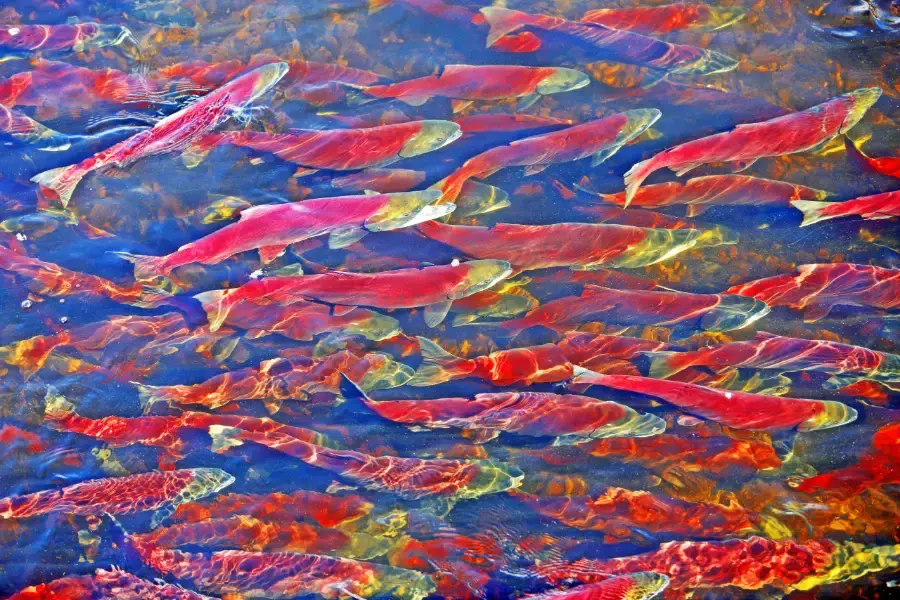
Astaxanthin is a red carotenoid pigment. In nature, microalgae make it to protect themselves from strong light and stress. Shrimp, krill and salmon eat those algae, which is why their flesh turns pink. You can read more about these natural sources of astaxanthin in food.
Food alone gives you small amounts. Supplements and feed need astaxanthin made at scale. Today, commercial astaxanthin comes from four production routes:
- Chemical synthesis from petrochemical building blocks
- Fermentation with the red yeast Phaffia rhodozyma
- Fermentation with the bacterium Paracoccus carotinifaciens
- Cultivation of the microalgae Haematococcus pluvialis
A 2023 review in Applied Microbiology and Biotechnology estimates synthetic astaxanthin held about 55% of the world market in 2024 [2]. Most of it goes into fish feed
What is synthetic astaxanthin?
Synthetic astaxanthin is made in a chemical plant. No living cell is involved. Manufacturers often call it "nature-identical" because the formula on paper matches the natural molecule.
How synthetic astaxanthin is made
The process joins petrochemical building blocks, such as isophorone and a C10 dialdehyde, over several reaction steps [3]. The result is free astaxanthin with no fatty acids attached.
The molecule shape is where it differs from algae astaxanthin. Synthetic astaxanthin is a mix of three mirror-image forms, called stereoisomers, in a 1:2:1 ratio: 3S,3'S, then 3R,3'S, then 3R,3'R [4]. Algae make almost only the 3S,3'S form.
Why you care: you get a blend of shapes, and only a quarter of it matches the form algae make.
Where synthetic astaxanthin is used
Its main job is colouring farmed salmon and trout. It costs about 1,200 to 1,500 USD per kilo, which makes it the cheapest source by far [2]. Some multivitamins and eye supplements also use it, and the label does not always say so [5].
What is fermented astaxanthin?
Fermented astaxanthin is made by microorganisms grown in closed steel tanks, fed on sugars or other nutrients. The organism builds the astaxanthin itself, so the result is biological. That is why many fermented products carry the word "natural" on the label.
This is the category most comparisons skip. Two organisms dominate it, and they give you very different molecules.
Yeast astaxanthin (Phaffia rhodozyma)
Phaffia rhodozyma, now named Xanthophyllomyces dendrorhous, is a red yeast first studied in the 1970s [6]. It is the oldest fermentation route.
- Molecule shape: mainly 3R,3'R, the mirror image of the algae form [2]
- Form: free astaxanthin, like synthetic [4]
- Yield: generally lower than Haematococcus pluvialis [2]
- Main use: fish and animal feed [2]
The 2023 review notes that yeast astaxanthin has GRAS status in the US but is approved by the FDA as a feed additive [2]. It also reports no EFSA approval for human food and no published human trials. A small number of yeast-based ingredients are now sold for supplements, mostly in the US, with taste and odour as their selling point [1].
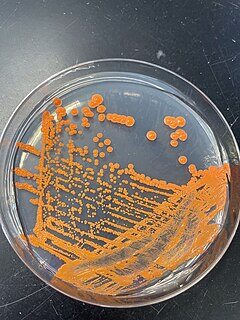
Bacterial astaxanthin (Paracoccus carotinifaciens)
Paracoccus carotinifaciens is a soil bacterium described in Japan in 1999 [7]. It makes the same 3S,3'S shape as algae, in its free form [8].
It does not make astaxanthin alone. It makes a carotenoid mix that also contains adonirubin, adonixanthin and canthaxanthin [10]. The EU authorised the dried bacterial cells in 2008 as a feed additive for salmon and trout, listing astaxanthin, adonirubin and canthaxanthin as active substances [9].
For human use, an astaxanthin-rich extract from this bacterium has a US GRAS notice and a small set of human studies, including a 2018 study on cognitive function [10]. Why you care: a bacterial extract gives you astaxanthin plus related carotenoids, so check how much of the total is astaxanthin.
New fermentation routes to watch
The word "fermented" now covers more than yeast and bacteria. Two newer routes are in development:
- Engineered microbes, such as modified yeasts and Corynebacterium, that carry the genes to make astaxanthin [8]
- "Dark" fermentation of algae, where Haematococcus grows in tanks without light, fed on acetic acid instead of sugar [11]
So "fermented" on a label tells you the method, not the organism. Ask which one.
What is natural algae astaxanthin?
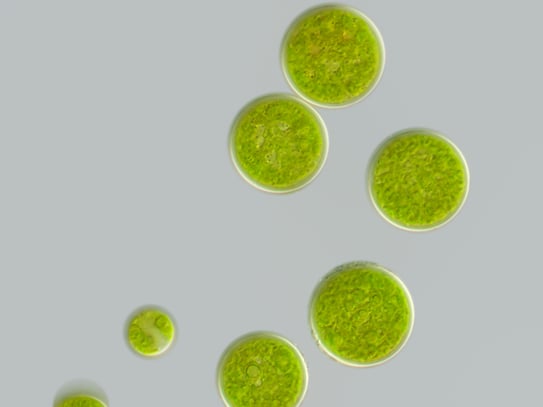
Natural astaxanthin in supplements usually means astaxanthin from Haematococcus pluvialis. It is a freshwater microalgae. Under stress, it turns from green to red and fills its cells with astaxanthin to survive.
Haematococcus pluvialis astaxanthin
This algae is the richest known source. It can store astaxanthin up to 3.8% of its dry weight [12].
- Molecule shape: 3S,3'S, the form found in wild salmon [12]
- Form: mostly esterified, which means fatty acids are attached to the molecule [12]
- Main use: food supplements and skincare
- Price: about 6,620 to 13,240 USD per kilo in some cases [2]
Algae astaxanthin costs more because light is the limit. Every cell needs enough light to turn red, and that is hard to deliver at scale.
Why the production method matters
Not every algae product is grown the same way. The industry has moved through four generations of systems, from open ponds to indoor tanks, closed glass tubes and flat panels. You can follow that story in how astaxanthin production evolved from open ponds to flat panels.
The method shapes what ends up in your capsule. Open ponds are exposed to dust, insects and other microbes. Closed systems keep the culture sealed and controlled.
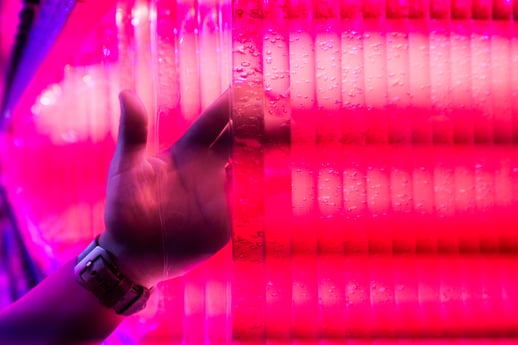
axabio®, a Belgian biotech company, grows Haematococcus pluvialis in a patented 4th generation flat-panel bioreactor. The panels are a few centimetres deep, with LEDs on both sides, so nearly every cell gets the same light. The system is closed, runs continuously and uses certified renewable energy. axabio® designed it to produce the purest and most stable natural astaxanthin it can, with less water and energy per kilo.
Synthetic vs fermented vs natural astaxanthin: side-by-side comparison
|
Synthetic |
Fermented: yeast |
Fermented: bacteria |
Natural: algae |
|
|---|---|---|---|---|
|
Made by |
Chemical synthesis |
Phaffia rhodozyma |
Paracoccus carotinifaciens |
Haematococcus pluvialis |
|
Starting material |
Petrochemicals |
Sugars in tanks |
Nutrients in tanks |
Water, light, CO2 |
|
Main stereoisomer |
Mix 3S,3'S : 3R,3'S : 3R,3'R (1:2:1) |
3R,3'R |
3S,3'S |
3S,3'S |
|
Form |
Free |
Free |
Free |
Mostly esterified |
|
Other carotenoids |
None |
Some |
Adonirubin, adonixanthin, canthaxanthin |
Lutein, beta-carotene, canthaxanthin in small amounts |
|
Main use today |
Fish feed |
Fish and animal feed |
Fish feed, some supplements |
Supplements, skincare |
|
EU Novel Food status |
Not authorised; EU feed additive only |
Not authorised; EU feed additive only |
Not authorised; EU feed additive only |
Authorised; up to 8 mg a day in supplements (over 14 years) |
|
Human trial base |
Very small |
None published (2023 review) |
Small |
Largest |
|
Price per kg (approx.) |
1,200 to 1,500 USD |
About 2,500 USD per comparable amount |
Not published |
6,620 to 13,240 USD |
Sources: [2], [4], [9], [10]; yeast price from [13]; EU Novel Food status: see the EU Novel Food section below.
Why molecule shape matters
Astaxanthin has two chiral points, one at each end of the molecule. Each end can point left (R) or right (S). That gives three shapes: 3S,3'S, 3R,3'R, and the mixed 3R,3'S.
The simple version: your cell membranes are built to hold the 3S,3'S shape. A 2022 review in Nutrients reports that 3S,3'S fits into membranes, while the 3R forms float freely in cells [4]. The authors expect lower activity from the 3R forms.
That review has limits. It contains no head-to-head human data, and its authors work in aquaculture. Still, it explains why the shape question keeps coming up.
What this means for you:
- Algae and bacterial astaxanthin give you 3S,3'S
- Yeast astaxanthin gives you 3R,3'R
- Synthetic gives you a mix of all three

Free vs esterified astaxanthin: what changes for stability
Free astaxanthin has nothing attached to its ends. It reacts easily with oxygen. The Nutrients review calls free astaxanthin particularly prone to oxidation [4].
Esterified astaxanthin has one or two fatty acids attached. Those fatty acids shield the molecule. In the studies the review cites, diesters were more stable than monoesters and free astaxanthin [4].
Your gut removes the fatty acids during digestion. Only free astaxanthin reaches your blood, whatever form you swallow [3]. So the esterified form protects the molecule on the shelf, and your body then frees it.
Fat helps absorption for every form. Taking astaxanthin with a meal or an oil base makes a difference, as explained in why astaxanthin absorbs better with MCT oil.
What does the research say about antioxidant strength?
You will often read that natural astaxanthin is 20 to 50 times stronger than synthetic. Those figures come from lab tests. Free radicals were measured in test tubes, not in people.
One 2013 study found algae astaxanthin outperformed synthetic in antioxidant tests [14]. Its authors recommended against synthetic astaxanthin as a human supplement until long-term safety studies exist. Note that some authors had ties to an algae astaxanthin producer.
The 2023 review reports synthetic astaxanthin shows about 20 times lower free radical neutralisation and 50 times lower reactive oxygen species neutralisation than natural astaxanthin [2].
Here is the fair summary:
- Lab tests favour algae astaxanthin over synthetic
- Most published human trials used algae astaxanthin
- Yeast astaxanthin has no published human trials, per the 2023 review
- Bacterial extract has a small human study base
The strongest point for algae astaxanthin is the size of its human research base, more than any single lab number.
Is synthetic or fermented astaxanthin safe?
All four sources are approved for at least some uses. The approvals differ.
- Algae: the EU authorises astaxanthin-rich oleoresin from Haematococcus pluvialis in food supplements. EFSA concluded that 8 mg a day from supplements, on top of a normal diet, is safe for adults [15].
- Synthetic: authorised mainly as a feed additive. The 2023 review states it has not been approved for human consumption, although some US supplements contain it [2, 5].
- Yeast: approved by the FDA as a feed additive, with no EFSA approval for human food [2].
- Bacteria: EU feed additive since 2008, with a US GRAS notice for an extract used in supplements [9, 10].
EU Novel Food approval: which astaxanthin can be sold as food in Europe?
In the EU, a food that was not eaten to a significant degree before 15 May 1997 needs Novel Food authorisation before it can be sold [15]. For astaxanthin, that approval is source-specific.
- The EU Union list of novel foods includes "astaxanthin-rich oleoresin from Haematococcus pluvialis algae" as an authorised novel food [17].
- In food supplements, the authorised level is 40 to 80 mg of oleoresin a day, which equals up to 8 mg of astaxanthin. Use is limited to adults and adolescents over 14 [16].
- Labels must name the ingredient "astaxanthin-rich oleoresin from Haematococcus pluvialis algae" [16].
- The EU updated the specifications of this novel food in 2024 [17]. In December 2025, EFSA assessed new uses, including dairy alternatives and fruit juices, and an algal meal form [19, 20].
- Synthetic, yeast and bacterial astaxanthin are authorised in the EU as feed additives for fish [18]. We found no EU Novel Food authorisation for them as food ingredients.
Why you care: if you buy astaxanthin in Europe, look for "astaxanthin-rich oleoresin from Haematococcus pluvialis algae" on the label. It tells you the source and that it matches the EU authorisation.
For dose ranges and side effects, see the astaxanthin safety guide.
How to tell which astaxanthin is in your supplement
Labels rarely say "synthetic" or "yeast". You need to read the small print. Use these five checks:
- Look for the source organism. Haematococcus pluvialis means algae. Phaffia rhodozyma, Xanthophyllomyces dendrorhous or "yeast" means fermented yeast. Paracoccus means fermented bacteria.
- Treat "natural" alone as incomplete. Fermented astaxanthin is also biological, so the word does not tell you the organism.
- Watch for "nature-identical". That term usually points to synthetic astaxanthin.
- Check the form. "Astaxanthin esters" or "oleoresin" usually points to algae. "Free astaxanthin" or "beadlets" can point to synthetic, yeast or bacteria.
- Ask how the algae were grown. Open ponds, tanks, tubes and flat panels give different purity and contamination risks. A good brand will tell you.
Still unsure? Email the brand and ask for the source organism and the production method. For more checks on dose, form and packaging, read our guide on how to choose the best astaxanthin supplement.
Common mistakes when comparing astaxanthin sources
- Assuming "natural" means algae. It can mean yeast or bacteria.
- Comparing milligrams across sources without checking the form. A bacterial extract lists total carotenoids, not only astaxanthin.
- Taking lab antioxidant figures as proof of effects in people.
- Ignoring the production method. Two algae products can differ in purity depending on how they were grown.
- Taking astaxanthin on an empty stomach. Every form needs fat to absorb well.
Choosing between synthetic, fermented and natural astaxanthin
Synthetic, fermented and natural astaxanthin share a formula, not a profile. Synthetic is cheap and built for feed. Fermented yeast and bacterial astaxanthin are biological, but each gives you a different shape and form. Natural algae astaxanthin gives you the esterified 3S,3'S form with the most human research behind it.
If you want natural astaxanthin from algae, look for Haematococcus pluvialis on the label and ask how it was grown. axabio® produces natural astaxanthin in Belgium in a closed 4th generation flat-panel bioreactor, built for purity and stability. Learn how our production works.

References
- Knowmade. Can microbial astaxanthin disrupt the dietary supplement market? 22 February 2023. knowmade.com
- Mussagy CU, Kot A, Dufossé L, et al. Microbial astaxanthin: from bioprocessing to the market recognition. Applied Microbiology and Biotechnology, 2023;107(13):4199-4215. doi:10.1007/s00253-023-12586-1
- Health effects of astaxanthin have been long studied. SupplySide Supplement Journal. supplysidesj.com
- Snell TW, Carberry J. Astaxanthin bioactivity is determined by stereoisomer composition and extraction method. Nutrients, 2022;14(7):1522. doi:10.3390/nu14071522
- ConsumerLab. Astaxanthin Supplements Review. consumerlab.com
- Andrewes AG, Phaff HJ, Starr MP. Carotenoids of Phaffia rhodozyma, a red-pigmented fermenting yeast. Phytochemistry, 1976;15(6):1003-1007. doi:10.1016/S0031-9422(00)84390-3
- Tsubokura A, Yoneda H, Mizuta H. Paracoccus carotinifaciens sp. nov., a new aerobic gram-negative astaxanthin-producing bacterium. International Journal of Systematic Bacteriology, 1999;49:277-282. doi:10.1099/00207713-49-1-277
- Seeger J, Henke NA. Superior intracellular antioxidant activity of an astaxanthin-containing corynebacterial extract. International Journal of Molecular Sciences, 2026;27(8):3638. doi:10.3390/ijms27083638
- Commission Regulation (EC) No 721/2008 concerning the authorisation of a preparation of red carotenoid-rich bacterium Paracoccus carotinifaciens as a feed additive. legislation.gov.uk
- Hayashi M, Ishibashi T, Kuwahara D, Hirasawa K. Commercial production of astaxanthin with Paracoccus carotinifaciens. In: Misawa N (ed.), Carotenoids: Biosynthetic and Biofunctional Approaches. Advances in Experimental Medicine and Biology, vol. 1261. Springer, 2021. doi:10.1007/978-981-15-7360-6_2
- AgFunderNews. Can dark fermentation reshape the natural astaxanthin market? agfundernews.com
- Ambati RR, Phang SM, Ravi S, Aswathanarayana RG. Astaxanthin: sources, extraction, stability, biological activities and its commercial applications, a review. Marine Drugs, 2014;12(1):128-152. doi:10.3390/md12010128
- Global Seafood Alliance. Demand is growing for natural astaxanthin for aquaculture feeds. globalseafood.org
- Capelli B, Bagchi D, Cysewski GR. Synthetic astaxanthin is significantly inferior to algal-based astaxanthin as an antioxidant and may not be suitable as a human nutraceutical supplement. Nutrafoods, 2013. doi:10.1007/s13749-013-0051-5
- EFSA NDA Panel. Safety of astaxanthin for its use as a novel food in food supplements. EFSA Journal, 2020;18(2):e05993. doi:10.2903/j.efsa.2020.5993
- Commission Implementing Regulation (EU) 2021/1377 of 19 August 2021 authorising the change of the conditions of use of the novel food astaxanthin-rich oleoresin from Haematococcus pluvialis algae. eur-lex.europa.eu
- Commission Implementing Regulation (EU) 2024/1026 of 8 April 2024 amending Implementing Regulation (EU) 2017/2470 as regards the specifications of the novel food astaxanthin-rich oleoresin from Haematococcus pluvialis algae. eur-lex.europa.eu
- EFSA FEEDAP Panel. Safety and efficacy of a feed additive consisting of astaxanthin-rich Phaffia rhodozyma for salmon and trout. EFSA Journal, 2022. doi:10.2903/j.efsa.2022.7161
- EFSA NDA Panel. Safety of the extension of use of oleoresin from Haematococcus pluvialis containing astaxanthin as a novel food pursuant to Regulation (EU) 2015/2283. EFSA Journal, 2025. doi:10.2903/j.efsa.2025.9737
- EFSA NDA Panel. Safety of algal meal from Haematococcus pluvialis containing astaxanthin as a novel food pursuant to Regulation (EU) 2015/2283. EFSA Journal, 2025. doi:10.2903/j.efsa.2025.9736