
Emma Hanegraef
Emma holds a MSc in Cellular and Genetic Engineering and has been passionate about the science behind skincare and health since the age of 12. As an experienced formulator, she translates complex scientific concepts into accessible knowledge, helping you make informed choices about your formulas.
Astaxanthin Eyes Health
Astaxanthin eye health research has produced more than 60 human clinical trials, with a substantial number focused specifically on screen-related eye fatigue. If your eyes ache after a long day on screens, you are not alone. Eye fatigue from digital devices now affects hundreds of millions of people worldwide, and the numbers keep rising.
Most people reach for eye drops or simply accept the discomfort. But astaxanthin is a natural compound with over a dozen placebo-controlled trials behind it, specifically for screen-related eye strain.
This article covers what the research shows, how astaxanthin works in the eye, what dose to look for, and why the quality of your astaxanthin source matters more than most brands will tell you.
What Is Screen-Induced Eye Fatigue?
Visual display terminals (VDTs), including computers, smartphones, tablets, and gaming consoles, strain your eyes in several specific ways.
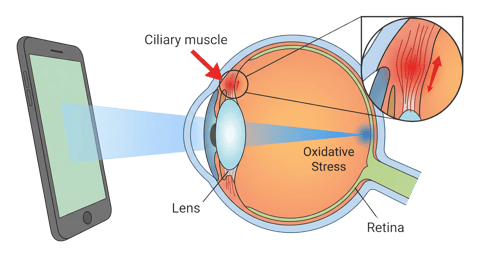
Prolonged screen use reduces your blink frequency. That dries your eyes out. It also forces your ciliary muscle (the muscle inside your eye that adjusts lens shape to focus) to hold a near-focus position for long periods. Over time, this causes:
- Blurred or fluctuating vision
- Dry or burning eyes
- Headaches
- Eye pain and pressure
- Dizziness and heavy-headedness
- Stiff shoulders and neck
These symptoms are grouped under the term "asthenopia," or eye fatigue. They are increasingly common among VDT users of all ages. A 2022 sensor study confirmed that blink patterns measurably deteriorate during prolonged screen use, worsening all of the above symptoms.
The problem is compounded by blue light. Most VDT screens use LED backlighting, and blue light exposure generates reactive oxygen species (ROS) inside photoreceptor cells. The National Eye Institute recognizes oxidative stress as a primary driver of retinal cell damage. Over time, that oxidative stress degrades visual function, accommodative ability, and retinal health.
How Astaxanthin Supports Eye Function
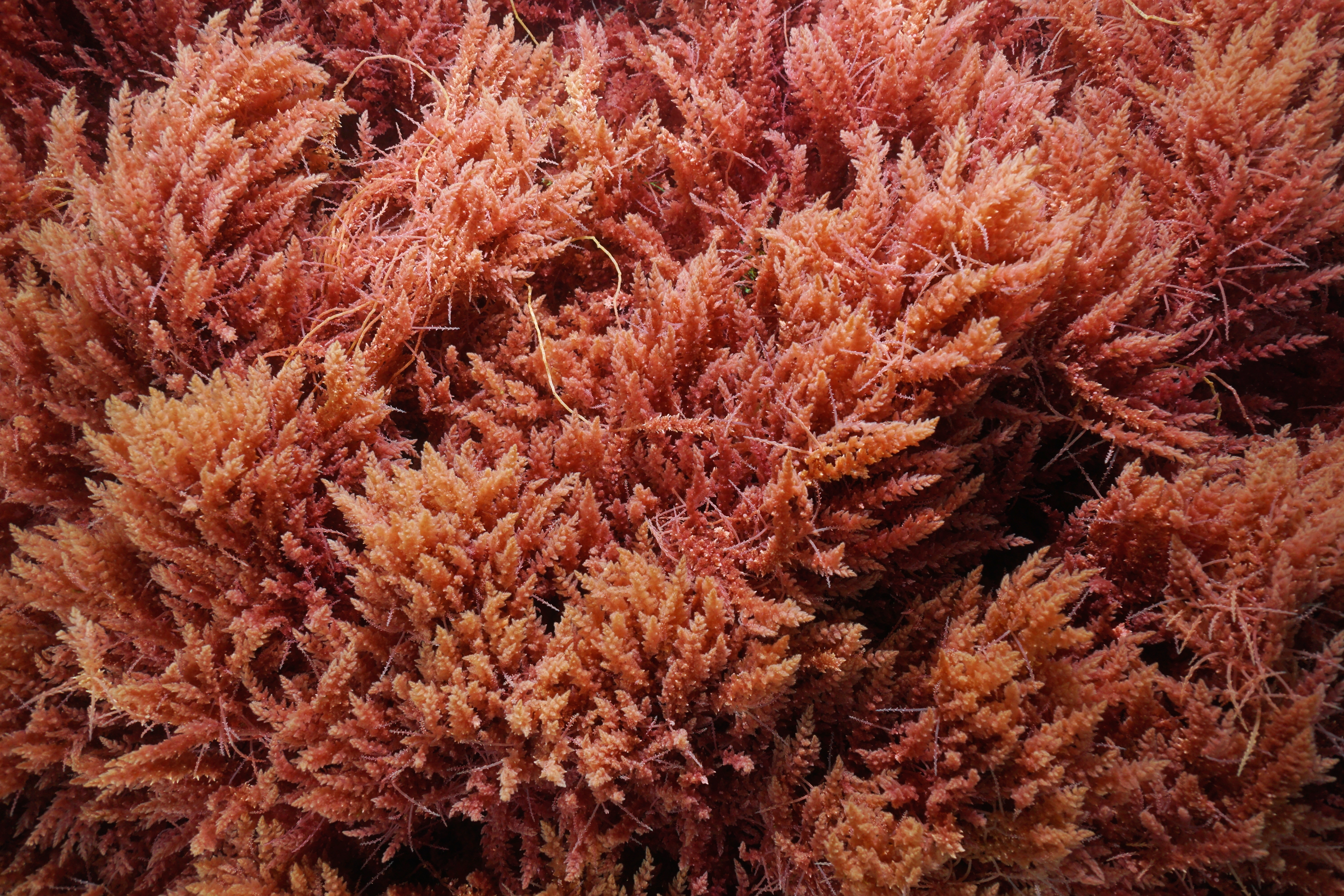
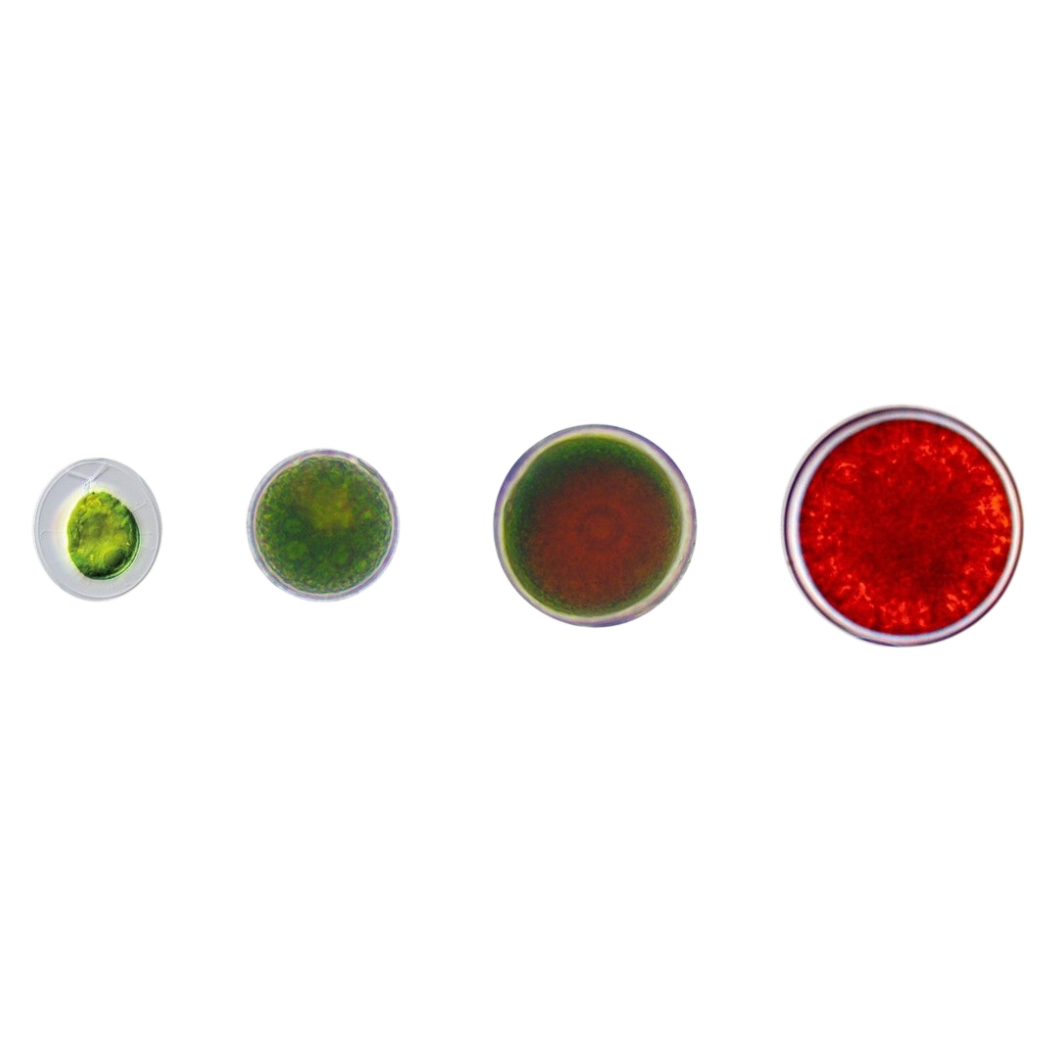
Astaxanthin is a red carotenoid pigment found naturally in microalgae, particularly Haematococcus pluvialis. It is one of the most potent antioxidants found in nature, with antioxidant activity substantially stronger than vitamin C, vitamin E, or beta-carotene.
What makes astaxanthin relevant to eye health specifically:
It crosses the blood-brain barrier. Most antioxidants cannot do this. Because astaxanthin can, it reaches ocular tissues directly and reduces ROS generated by screen exposure in the ciliary muscle and photoreceptor cells.
It reaches the ciliary body. Animal research shows that after oral astaxanthin intake, the compound accumulates in the ciliary body, which is the exact muscle strained by prolonged VDT use. This explains why clinical studies consistently see improvements in accommodation (the eye's ability to shift focus).
It reduces oxidative stress in the retina. Astaxanthin absorbs blue light and neutralizes free radicals before they damage retinal cells. This also supports the macular pigment, which protects the central visual field.
What Human Clinical Trials Show
The following studies all used astaxanthin derived from H. pluvialis at doses between 4 and 12 mg per day.
Improving Eye Accommodation and Reducing Fatigue Symptoms
A 4-week, double-blind, randomized, placebo-controlled study tested 6 mg/day of astaxanthin in VDT workers with eye fatigue. Compared to placebo, the astaxanthin group showed a significant improvement in visual accommodation. Subjective symptoms also improved, including heavy-headedness, dimness of sight, and stiff shoulders.
A second 4-week study replicated these results with the same dose. Visual accommodation improved significantly, and two subjective symptoms "bleary-eye feeling" and "tendency of irritation" improved versus placebo. Laboratory tests showed no adverse effects.
A crossover study gave healthy participants 6 mg/day of astaxanthin or placebo for 14 days, followed by a 20-minute near visual task. After the task, accommodation relaxation time was significantly longer in the placebo group. The astaxanthin group recovered faster and reported lower levels of eye fatigue, blurred vision, and eye dryness.
Protecting Visual Acuity in Screen Users Over 40
A 6-week randomized trial with 60 healthy VDT users tested 9 mg/day of astaxanthin. In participants aged 40 and over, corrected visual acuity of the dominant eye showed a significantly higher protective effect in the astaxanthin group compared to placebo after VDT work (p<0.05).
Under-40 participants showed no significant difference, which is consistent with the known mechanism: age-related decline in ciliary muscle strength is the primary driver of VDT-induced visual acuity loss, and astaxanthin targets that exact pathway via its antioxidant and circulatory effects.
Children and Digital Eye Strain
A 2025 randomized trial tested 4 mg/day of astaxanthin over 84 days in 64 school-age children who spent at least 4 hours daily on screens. The astaxanthin group showed a 20% greater improvement in computer vision syndrome scores versus placebo, a 27% improvement in visual fatigue scale scores, and significant improvements in stereopsis and pupillary light reflex. Tear production also increased significantly.
This is among the most recent evidence available and suggests astaxanthin's benefits extend across age groups, even at lower doses.
Astaxanthin, Lutein, and Zeaxanthin for Gamers
A randomized, double-blind, placebo-controlled trial published in Nutrients (MDPI) specifically studied habitual VDT and video game users. Participants received a daily combination of 6 mg astaxanthin, 10 mg lutein, and 2 mg zeaxanthin, or placebo, for 8 weeks.
At the 8-week mark, the active group showed a significant improvement in eye-hand coordination after VDT work. The active group also showed a meaningful increase in macular pigment optical density (MPOD), a key marker of long-term macular protection.
Lutein and zeaxanthin are concentrated in the macular pigment and filter blue light at the retinal level. Combined with astaxanthin's ciliary muscle and antioxidant effects, this three-carotenoid combination addresses screen fatigue from multiple angles simultaneously.
For gamers in particular, eye-hand coordination is a practical, measurable benefit and not just symptom relief.
Adding Anthocyanins: Evidence from a Gaming Study
A 6-week randomized trial tested a triple combination of 6 mg astaxanthin, 72 mg anthocyanin (from bilberry), and 10 mg lutein in healthy Japanese adults with eye fatigue from video game use.
Compared to placebo, the active group showed a significant improvement in the percentage of pupillary response (both eyes and dominant eye) during and after VDT operation. Accommodative function decline was suppressed, and subjects reported improvements in "trouble focusing" and "difficulty seeing."
Bilberry anthocyanins are known to support rhodopsin regeneration, the visual pigment involved in low-light vision and rapid focus adjustment. Combined with astaxanthin, the effect on accommodative function appears additive.
Tips: The full body of human clinical research on astaxanthin can be retrieved on PubMed.What About Other Visual Benefits?
Beyond screen fatigue, astaxanthin has shown measurable benefits in additional visual parameters.
A 4-week placebo-controlled study tested 6 mg/day astaxanthin's effects on both vision and physical performance. In the visual arm, the astaxanthin group showed significantly improved deep vision and critical flicker fusion frequency (CFF) versus placebo. CFF is a measure of how well your visual system processes rapidly changing stimuli, which is relevant for driving, sports, and fast-paced gaming.
Studies using doses between 4 mg and 12 mg have also shown improvements in uncorrected far visual acuity, shortened accommodation time, and improvements in visual evoked potential patterns.
Why Astaxanthin Source and Processing Matter
Most astaxanthin that is being sold comes from Haematococcus pluvialis, mostly because astaxanthin from synthetic source is forbidden for human consumption.
But while the source determine quality. the production method is also a key factor.
How the algae is grown and processed determines how much astaxanthin your body can actually absorb. You can find our guide to astaxanthin bioavailability and production methods for a deeper comparison.
Cell wall integrity is the key variable. The astaxanthin is locked inside the algae's cell wall. If that wall is not broken before consumption, your digestive system cannot meaningfully access the active compound. Studies suggest that "cold pressed" or "solvent-free" astaxanthin without cell wall disruption may deliver very little bioavailable astaxanthin.
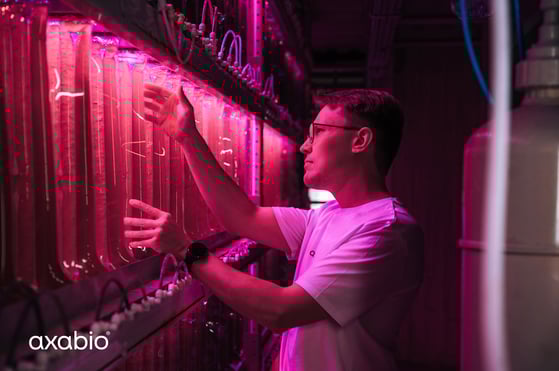
At axabio, we grow H. pluvialis in a patented 4th-generation closed bioreactor system. This eliminates contamination from outdoor pollutants, stabilizes the growing conditions, and produces astaxanthin with a consistent, high trans-isomer profile. The trans-isomer is the form your body absorbs more efficiently.
Our production process also includes proper cell wall disruption, ensuring the astaxanthin in each capsule is fully accessible to your gut for absorption.
When comparing astaxanthin products, check for:
- Sourced from Haematococcus pluvialis (not synthetic)
- Cell wall broken or cracked in the production process
- Grown in closed bioreactor (not open ponds, which carry contamination risk)
- Standardized astaxanthin content per capsule
- Trans-isomer dominant profile
"Sun-grown" or "outdoor" labels on astaxanthin products often indicate open-pond production, which carries a higher risk of variability in quality and polluants contamination.
How Much Astaxanthin Do You Need?
The clinical research consistently used doses between 4 mg and 12 mg per day. Most positive outcomes were observed at 6 mg/day, with some studies showing additional benefit at 9 mg/day for people over 40.
| Dose | Duration | Outcome |
|---|---|---|
| 4 mg/day | 12 weeks | Improved far visual acuity and accommodation time |
| 6 mg/day | 4 weeks | Improved accommodation, reduced eye fatigue symptoms |
| 6 mg/day | 6 weeks | Suppressed accommodative decline in gamers |
| 9 mg/day | 6 weeks | Protected visual acuity in VDT users over 40 |
| 6 mg/day | 8 weeks | Improved eye-hand coordination in screen users |
There is no evidence of adverse effects at doses up to 12 mg/day. All cited studies reported no changes in laboratory safety markers and no adverse events.
Astaxanthin is fat-soluble. Take it with a meal containing some dietary fat to maximize absorption.
Key Takeaways
Screen time places measurable stress on your eyes through two pathways: mechanical strain on the ciliary muscle and oxidative damage from blue light. Astaxanthin addresses both.
More than a dozen human clinical trials, including several randomized, double-blind, placebo-controlled studies, confirm that astaxanthin at 6 to 9 mg/day improves accommodation, reduces eye fatigue symptoms, and protects visual acuity in screen users, particularly those over 40.
When combined with lutein, zeaxanthin, or anthocyanins, the effects extend to eye-hand coordination and macular protection. These are outcomes that matter for both daily comfort and sustained visual performance.
The quality of your astaxanthin source determines how much of that research actually translates to your body. Closed bioreactor production with broken cell walls is the standard that the clinical evidence was built on. Learn more about how axabio produces natural astaxanthin.

References:
1 Yin Z, Liu B, Hao D, Yang L, Feng Y. Evaluation of VDT-Induced Visual Fatigue by Automatic Detection of Blink Features. Sensors (Basel). 2022 Jan 25;22(3):916.
2 Nagaki Y, Mihara M, Tsukuhara H, Ohno S. The supplementation effect of Astaxanthin on Accommodation and Asthenopia. Journal of Clinical Therapeutics & Medicines. 2006;22(1):41-54.
3 Sekikawa T, Kizawa Y, Li Y, Miura N. Effects of diet containing astaxanthin on visual function in healthy individuals: a randomized, double-blind, placebo-controlled, parallel study. J Clin Biochem Nutr. 2023 Jan;72(1):74-81.
4 Shiratori K, Ogami K, Nitta T, et al. Effect of Astaxanthin on Accommodation and Asthenopia-Efficacy-Identification Study in Healthy Volunteers. Journal of Clinical Therapeutics & Medicines. 2005;21(6):637-650.
5 Yoshida K, Sakai O, Honda T, Kikuya T, Takeda R, Sawabe A, Inaba M, Koike C. Effects of Astaxanthin, Lutein, and Zeaxanthin on Eye-Hand Coordination and Smooth-Pursuit Eye Movement after Visual Display Terminal Operation in Healthy Subjects: A Randomized, Double-Blind Placebo-Controlled Intergroup Trial. Nutrients. 2023 Mar 17;15(6):1459.
6 Kizawa Y, Sekikawa T, Kageyama M, Tomobe H, Kobashi R, Yamada T. Effects of anthocyanin, astaxanthin, and lutein on eye functions: a randomized, double-blind, placebo-controlled study. J Clin Biochem Nutr. 2021 Jul;69(1):77-90.
7 Keisuke S, Hiroshi Y, Kazuhiro A, et al. Sports Performance Benefits from Taking Natural Astaxanthin Characterized by Visual Acuity and Muscle Fatigue Improvement in Humans. Journal of Clinical Therapeutics & Medicines. 2002;18(9):1085-1100.
8 Nagaki Y, Hayasaka S, Yamada T, et al. Effects of astaxanthin on accommodation, critical flicker fusion, and pattern visual evoked potential in visual display terminal workers. Journal of Traditional Medicines. 2002;19(5):170-173.
9 Kaira N, Ryoko I, Yasuhiro O, Yasuko A, Daisuke N, Chika H, Shizuka S, Yoshiaki S, Masayuki H. Changes in visual function following peroral astaxanthin. Japanese Journal of Clinical Ophthalmology. 2004;58(6):1051-1054.
10 Nanako T, Masayoshi K. Effects of Astaxanthin on Accommodative Recovery. Journal of Clinical Therapeutics & Medicines. 2005;21(4):431-436.