
Emma Hanegraef
Emma holds a MSc in Cellular and Genetic Engineering and has been passionate about the science behind skincare and health since the age of 12. As an experienced formulator, she translates complex scientific concepts into accessible knowledge, helping you make informed choices about your formulas.
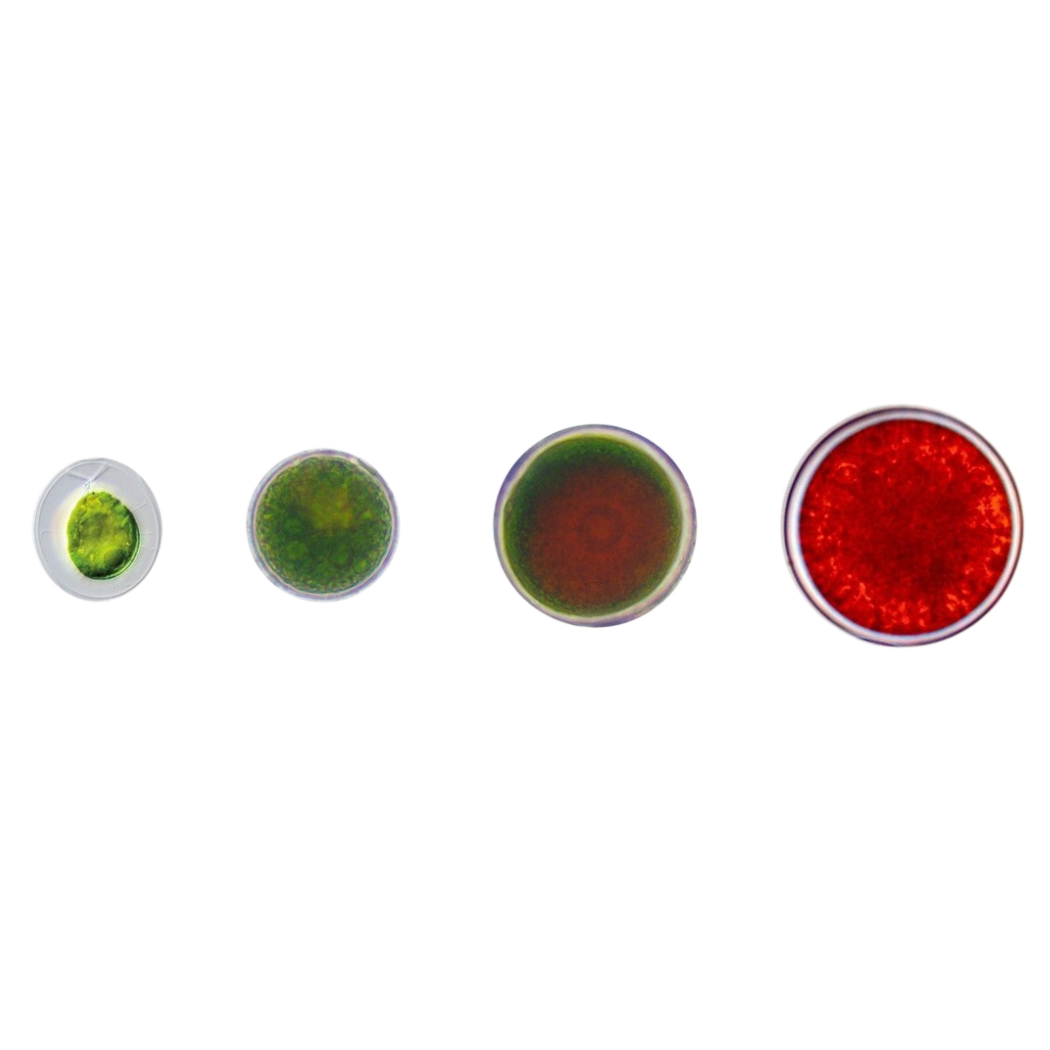
Winter is the busiest season for your immune system. Days are short, you spend more time indoors, and respiratory viruses spread more easily. Many people reach for vitamin C and vitamin D. Fewer know about astaxanthin, a red carotenoid made by the microalgae Haematococcus pluvialis.
Research on astaxanthin and immune health has grown steadily since 2010. Human trials have measured natural killer cell activity, antibody levels and inflammation markers in people taking astaxanthin every day. The results are consistent, and they explain why astaxanthin is getting attention as a winter supplement.
This article covers what astaxanthin does inside immune cells and what each key human study found. It also compares astaxanthin with vitamin C and shows you how to use it this winter. You will also learn why the source and purity of your astaxanthin change what you get from it.
If you are new to astaxanthin, start with our complete guide to astaxanthin benefits.
Astaxanthin and Immune Health: The Short Answer
Astaxanthin supports immune health by protecting immune cells from oxidative stress and by balancing inflammation. Controlled human studies found that daily astaxanthin:
- Increased natural killer cell activity in healthy young women (2 to 8 mg a day for 8 weeks)
- Raised salivary IgA, the antibody that guards your airways, in trained athletes (4 mg a day for 90 days)
- Helped antibody levels recover after hard exercise in runners (8 mg a day for 4 weeks)
- Lowered C-reactive protein, a key marker of inflammation
These studies were done in healthy people. Astaxanthin is a nutritional support for your immune system. It does not treat or prevent infections.
Why Winter Puts Pressure on Your Immune System
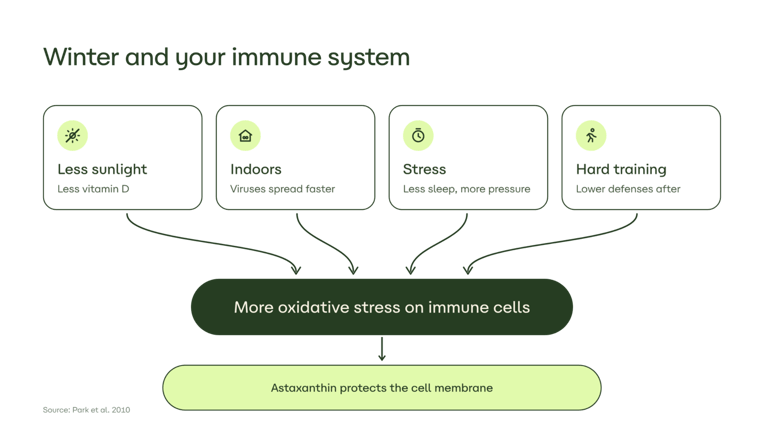
Your immune system works all year. In winter, several things stack up at once.
- Less sunlight: Your skin makes less vitamin D between October and March in Northern Europe.
- More time indoors: Close contact in heated rooms makes it easier for viruses to pass between people.
- Shorter, busier days: Year-end deadlines and poor sleep raise stress hormones.
- Cold-weather training: Long or intense workouts temporarily lower some immune defenses.
All four add to oxidative stress. That matters more than most people think.
Immune cells are sensitive to oxidative stress
Immune cells have membranes rich in polyunsaturated fats. These fats oxidize easily. Immune cells also produce reactive oxygen species on purpose to destroy germs. Researchers at Washington State University noted that this makes immune cells especially sensitive to oxidative damage.
So what? When oxidative stress runs high, your immune cells work less efficiently. An antioxidant that protects cell membranes helps them keep doing their job.
How Your Immune System Works: Two Lines of Defense
To understand the astaxanthin studies, it helps to know what researchers measured. Your immune system has two main layers. They work together every day.
Innate immunity: your fast response
Innate immunity reacts within minutes to hours. It does not need to recognize a specific germ first.
- Physical barriers: Your skin, the mucus in your nose and airways, and the lining of your gut keep most germs out.
- Salivary IgA: This antibody sits in your saliva and airway mucus. It traps germs at the point of entry.
- Natural killer (NK) cells: These cells find and destroy cells infected by viruses. They act before your body has built specific antibodies.
- Macrophages and neutrophils: These cells engulf and break down bacteria and debris.
Adaptive immunity: your targeted response
Adaptive immunity takes days to build. It learns the exact shape of a germ and remembers it for next time.
- T cells: Helper T cells coordinate the response. Cytotoxic T cells destroy infected cells.
- B cells: These cells produce antibodies that tag germs for removal.
- Antibodies (immunoglobulins): IgM is the first antibody your body makes against a new threat. IgG gives longer-term protection. IgA guards your mucous membranes.
Cytokines: the messengers
Immune cells talk to each other through signal proteins called cytokines. Some, like interferon-gamma, switch on a defense. Others, like IL-6 and TNF-alpha, drive inflammation. You need these signals in short bursts. Problems start when inflammatory signals stay high for weeks or months.
So what? The human astaxanthin studies measured markers on both layers. They looked at NK cells and salivary IgA on the fast side, and at T cells, B cells and immunoglobulins on the targeted side.
How Astaxanthin Works Inside Your Immune Cells
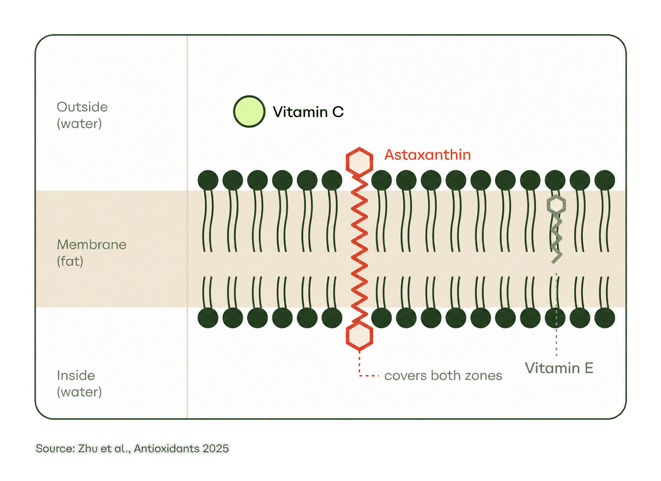
Astaxanthin has an unusual shape. It is long enough to span the full width of a cell membrane. One end sits on the outer surface, the other on the inner surface, and the middle sits inside the fatty layer.
This position lets astaxanthin neutralize free radicals inside and outside the membrane at the same time. Most antioxidants protect only one side. Vitamin C works in water. Vitamin E works inside fat. Astaxanthin covers both zones.
Researchers describe three main effects relevant to immunity:
- Membrane protection: It keeps immune cell membranes stable under oxidative stress.
- Inflammation balance: It helps regulate NF-kB, a switch that turns on inflammatory signals.
- Antioxidant defense: It activates Nrf2, which tells your cells to make more of their own antioxidant enzymes.
Astaxanthin also does not turn into a pro-oxidant when it runs out, unlike some other antioxidants at high doses. Learn more about this in our article on 10 astaxanthin health benefits backed by science.
What the Human Research Shows
Three controlled human trials form the core of the evidence. A systematic review published in January 2026 adds a wider view.
Study 1: Stronger immune response in healthy young women (Park et al., 2010)
This was the first human trial built to test astaxanthin and immune response. Researchers at Washington State University gave 42 healthy women, average age 21.5, either 0, 2 or 8 mg of astaxanthin a day for 8 weeks. The study was randomized, double-blind and placebo-controlled. The astaxanthin came from Haematococcus pluvialis.
What they found:
- Natural killer cell activity increased. NK cells are your first line of defense against virus-infected cells.
- Total T cell and B cell numbers increased.
- Lymphocytes responded more strongly when challenged.
- A DNA damage marker dropped after 4 weeks.
- C-reactive protein was lower at week 8 in the 2 mg group.
- Interferon-gamma and IL-6, two signals immune cells use to coordinate a response, rose in the 8 mg group.
Plasma astaxanthin rose with the dose. That shows the body absorbed it and carried it to the blood, where immune cells circulate.
So what? Even 2 mg a day changed measurable immune markers in healthy people within 8 weeks.
Study 2: More airway antibodies in athletes (Baralic et al., 2015)
Hard training lowers salivary IgA. This antibody coats your mouth and airways and blocks germs before they get in. Low IgA in athletes is linked to more upper respiratory infections during training seasons.
Researchers in Serbia gave 40 young male soccer players either 4 mg of astaxanthin or a placebo every day for 90 days. Players trained 5 to 7 times a week.
What they found:
- Salivary IgA rose in the astaxanthin group and fell in the placebo group.
- Muscle damage markers dropped with astaxanthin.
- Inflammation stayed lower in the astaxanthin group.
- The balance between oxidants and antioxidants improved.
So what? Astaxanthin helped protect a front-line immune defense during months of heavy physical stress.
Study 3: Faster antibody recovery after hard exercise (Nieman et al., 2023)
David Nieman's team at Appalachian State University tested astaxanthin in runners. The design was randomized, double-blind, placebo-controlled and crossover. Each runner took 8 mg of algae astaxanthin or placebo daily for 4 weeks. They then ran for 2.25 hours at about 70 percent of their maximum capacity.
The team measured hundreds of blood proteins with proteomics.
What they found:
- Hard running lowered 82 immune-related proteins. Astaxanthin countered that drop.
- Twenty immunoglobulins differed between the astaxanthin and placebo trials.
- IgM, the first antibody your body makes against a new threat, recovered within 24 hours with astaxanthin. It did not recover with placebo.
- Astaxanthin did not change muscle soreness, cytokines or oxylipins in this study.
So what? The effect here was on immune recovery, not on soreness. That fits the picture of astaxanthin as immune support during physical stress.
What the 2026 systematic review adds
A systematic review in the International Journal of Molecular Sciences (January 2026) pooled 15 human studies published between 2020 and 2025. Animal and lab studies were excluded.
The authors found that astaxanthin consistently lowered pro-inflammatory signals such as IL-6 and TNF-alpha and improved oxidative stress markers. When combined with exercise, astaxanthin also improved immune recovery. The authors called for more trials to confirm the best doses.
Human studies at a glance
|
Study |
Who |
Daily dose |
Duration |
Key immune finding |
|---|---|---|---|---|
|
Park et al., 2010 |
42 healthy young women |
2 or 8 mg |
8 weeks |
Higher NK cell activity, more T and B cells, lower CRP |
|
Baralic et al., 2015 |
40 young soccer players |
4 mg |
90 days |
Higher salivary IgA, lower inflammation |
|
Nieman et al., 2023 |
Trained runners |
8 mg |
4 weeks |
Immunoglobulins recovered within 24 h after exercise |
|
Malcangi et al., 2026 |
Review of 15 human studies |
Various |
Various |
Lower IL-6 and TNF-alpha, better immune recovery with exercise |
Astaxanthin and Immune Health as You Age
Your immune system changes as you get older. Researchers call this immunosenescence. It affects both layers of defense.
- Fewer new T cells: Your body makes fewer fresh T cells after midlife, so responses to new germs get slower.
- Lower salivary IgA: IgA secretion in saliva drops with age, which weakens the airway barrier.
- More background inflammation: Inflammatory signals such as IL-6 tend to rise and stay higher.
- More oxidative stress: Your own antioxidant defenses become less efficient.
This is one reason winter infections hit older adults harder. It also explains why antioxidant and anti-inflammatory support gets more attention after 50.
What the research in older adults shows
A Japanese trial at Tohoku University studied 30 healthy adults aged 50 to 69. Participants took 0, 6 or 12 mg of astaxanthin from Haematococcus pluvialis every day for 12 weeks. The study was randomized, double-blind and placebo-controlled.
- Astaxanthin built up in red blood cells in both the 6 mg and 12 mg groups.
- Oxidized fats in red blood cell membranes dropped by about 40 percent at 6 mg and about 50 percent at 12 mg.
- The placebo group showed no significant change.
This study shows two things that matter for immune health. Astaxanthin reaches the cells that circulate in your blood, and it protects their membranes in people over 50.
So what? The membrane protection seen in older adults is the same effect that keeps immune cells working under oxidative stress. Trials that measure immune cells directly in older adults are the next step researchers need.
Winter Training: Astaxanthin for Active People
Regular, moderate exercise is good for your immune system. Long or very hard sessions are a different story. For several hours afterwards, some immune markers drop below normal.
After a long run or an intense training block, you will often see:
- Lower salivary IgA
- Lower immunoglobulins in the blood
- A spike in inflammatory cytokines
- More oxidative stress in muscle and immune cells
Athletes in heavy training report more upper respiratory infections. Cold air, crowded gyms and winter races add to that risk.
Two of the three core astaxanthin trials tested exactly this situation. In soccer players, 4 mg a day kept salivary IgA rising during 90 days of heavy training. In runners, 8 mg a day helped immunoglobulins return to normal within 24 hours of a 2.25-hour run.
What this means for your winter training
- Plan your astaxanthin before a training block or winter race, not on race day. Both studies supplemented for 4 weeks or longer.
- Take it with a meal that contains fat, such as breakfast with eggs or yoghurt.
- Give yourself 24 to 48 hours of easy days after your hardest sessions.
- Sleep at least 7 hours on heavy training days.
- Eat enough carbohydrate and protein after long sessions. Under-fuelling also lowers immune markers.
Results on muscle recovery are mixed. In the soccer trial, muscle damage markers dropped. In the runners, soreness did not change. The immune effect showed up in both.
Astaxanthin, Inflammation and Your Immune Balance
A strong immune system is a balanced one. You want a fast response to real threats. You do not want inflammation that stays switched on.
Low-grade inflammation that lasts for months is called inflammaging. It rises with age and wears down immune function over time. In the studies above, astaxanthin lowered CRP and IL-6 in some settings and raised immune-cell activity in others. Researchers call this immune modulation. Astaxanthin nudges the system toward balance in both directions.
Read more in our article on how astaxanthin combats inflammaging.
The gut connection
A large share of your immune cells live in the lining of your gut. The gut barrier decides what passes into your body and what stays out. Early research shows astaxanthin helps protect that barrier and supports a balanced microbiome. Most of this work comes from animal and lab studies so far.
For the full picture, read astaxanthin and gut health: what the research shows.

Astaxanthin vs Vitamin C for Immune Health
Vitamin C is the most popular winter supplement. EFSA recognizes that it contributes to the normal function of the immune system. So does vitamin D, as well as zinc and selenium.
Astaxanthin and vitamin C do different jobs. They work well together.
|
Astaxanthin |
Vitamin C |
|
|---|---|---|
|
Solubility |
Fat-soluble |
Water-soluble |
|
Where it works |
Across the full cell membrane |
In the watery parts of cells and blood |
|
How long it stays |
Builds up in tissues over weeks |
Flushed out within hours |
|
Singlet oxygen quenching (lab tests) |
Up to 6,000 times stronger |
Reference value |
So what? Vitamin C protects the water side of your cells. Astaxanthin protects the fatty membrane side. Taking both covers more ground than either one alone.
The 6,000 times figure comes from lab tests of one type of free radical, singlet oxygen. It does not mean astaxanthin is 6,000 times more effective in your body. It shows how strongly the molecule neutralizes that specific threat.
How to Use Astaxanthin This Winter
Dose
- The immune studies used 2 to 8 mg a day.
- EFSA concluded in 2020 that 8 mg a day from supplements is safe for adults.
- Most people take 4 to 8 mg a day for general support.
- You may see 24 mg products in the US. That dose is above what EFSA has assessed for the EU.
Timing
- Take astaxanthin with a meal that contains fat. It is fat-soluble, and fat helps your gut absorb it.
- Take it at the same time every day.
- Start in October or November. The studies saw changes after 4 to 8 weeks, so give it time to build up.
Build a complete winter routine
Astaxanthin works best as one part of a solid routine:
- Get vitamin D from a supplement between October and March.
- Eat vitamin C from fruit and vegetables every day.
- Sleep 7 to 9 hours a night.
- Keep moving, but plan recovery after hard sessions.
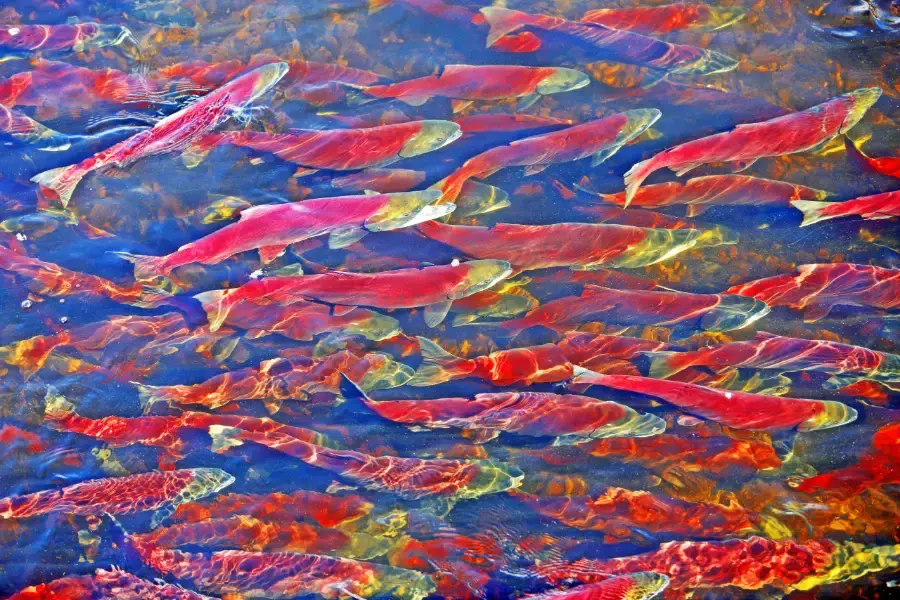
- Eat salmon, trout or shrimp for small amounts of dietary astaxanthin.
Can you get enough astaxanthin from food?
Food gives you some astaxanthin, but rarely the amounts used in the immune studies.
|
Food |
Approximate astaxanthin |
To reach 4 mg |
|---|---|---|
|
Wild sockeye salmon |
About 4.5 mg per 113 g |
About 100 g |
|
Farmed Atlantic salmon |
6 to 8 mg per kg |
500 to 650 g |
|
Shrimp, crab, lobster |
Varies, mostly in shells and heads |
Hard to estimate |
|
Krill oil |
Low, check the label |
Several servings in most cases |
Wild sockeye is the richest common food source. Most people do not eat it every day, and farmed salmon carries far less. For steady daily intake through winter, a Haematococcus pluvialis supplement is the practical option.
Common mistakes to avoid
- Taking it on an empty stomach. Absorption drops without fat.
- Stopping after one week. Benefits in the studies appeared after 4 weeks or more.
- Choosing a product without checking the source. Synthetic astaxanthin differs from natural astaxanthin in form and structure.
- Expecting it to replace vitamin D, sleep or medical care.
Who May Benefit Most from Astaxanthin in Winter
Astaxanthin is a daily nutritional support for healthy adults. Based on who took part in the studies, these groups have the clearest reasons to consider it.
|
Who |
Why it fits |
What the research covers |
|---|---|---|
|
Endurance athletes and team-sport players |
Hard training lowers IgA and immunoglobulins |
Soccer players (4 mg) and runners (8 mg) |
|
Adults over 50 |
Oxidative stress and inflammation rise with age |
Adults aged 50 to 69 (6 and 12 mg) |
|
People with high-pressure jobs |
Stress and short sleep raise oxidative stress |
Indirect, based on oxidative stress markers |
|
Healthy adults who want winter support |
NK cells, T cells and B cells responded in healthy people |
Young women (2 and 8 mg) |
|
People who rarely eat oily fish |
Low dietary astaxanthin intake |
Food content figures above |
Astaxanthin is not a substitute for medical care. Talk to your doctor first if you have an autoimmune condition, take immune-suppressing medication or blood thinners, or are pregnant or breastfeeding.
Why Astaxanthin Quality Matters for Immune Support
Every human immune study above used natural astaxanthin from Haematococcus pluvialis. That matters when you choose a product.
Natural vs synthetic vs krill
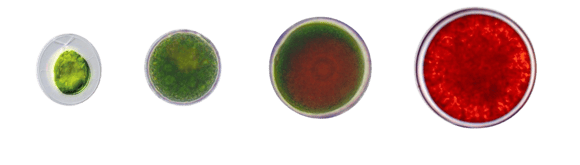
- Haematococcus pluvialis: The richest natural source. It produces astaxanthin in the 3S,3'S form, mostly esterified with fatty acids. This is the form used in the immune trials.
- Synthetic astaxanthin: Made from petrochemicals. It is a mix of different forms and is mainly used in fish feed.
- Krill oil: Contains astaxanthin, but at much lower levels. You would need a lot of krill oil to reach the 4 to 8 mg used in studies.
How the algae are grown changes what you get
Haematococcus pluvialis can be grown in open ponds, in tubes or in closed photobioreactors. Open systems expose the algae to the weather, dust and other microorganisms. That makes purity harder to control.
At axabio®, we grow Haematococcus pluvialis in our patented 4th generation flat-panel photobioreactors in Belgium. The fully closed system controls light, temperature and nutrients at every stage. The result is natural astaxanthin with high purity and strong stability.
Stability matters for an antioxidant. Astaxanthin that breaks down on the shelf loses its activity before it reaches you. Purity matters because you want the astaxanthin, without contaminants from an open environment.
axabio® is also the first natural astaxanthin producer certified as a B Corporation, thanks to lower energy and water use for the purity achieved.
Your Winter Plan for Astaxanthin and Immune Health
The research on astaxanthin and immune health points in one direction. Daily astaxanthin protected immune cells from oxidative stress, increased NK cell activity, supported antibody levels and kept inflammation in check. These effects appeared in healthy adults and athletes at 2 to 8 mg a day.
Start now so it has time to build up before peak winter. Take it with a fatty meal and pair it with vitamin D and vitamin C. Choose natural astaxanthin from Haematococcus pluvialis grown in a closed system.
Want to learn more? Explore the axabio® Knowledge Hub for more research on astaxanthin, or discover our natural astaxanthin range, grown in Belgium with our patented 4th generation technology.


References
- Park JS, Chyun JH, Kim YK, Line LL, Chew BP. Astaxanthin decreased oxidative stress and inflammation and enhanced immune response in humans. Nutr Metab (Lond). 2010;7:18. doi:10.1186/1743-7075-7-18. https://pmc.ncbi.nlm.nih.gov/articles/PMC2845588/
- Baralic I, Andjelkovic M, Djordjevic B, et al. Effect of astaxanthin supplementation on salivary IgA, oxidative stress, and inflammation in young soccer players. Evid Based Complement Alternat Med. 2015;2015:783761. doi:10.1155/2015/783761. https://pmc.ncbi.nlm.nih.gov/articles/PMC4488551/
- Nieman DC, Woo J, Sakaguchi CA, et al. Astaxanthin supplementation counters exercise-induced decreases in immune-related plasma proteins. Front Nutr. 2023;10:1143385. doi:10.3389/fnut.2023.1143385. https://pmc.ncbi.nlm.nih.gov/articles/PMC10070989/
- Malcangi G, Inchingolo AM, Casamassima L, et al. The role of astaxanthin as an antioxidant and anti-inflammatory agent in human health: a systematic review. Int J Mol Sci. 2026;27(2):700. doi:10.3390/ijms27020700. https://www.mdpi.com/1422-0067/27/2/700
- Zhu X, Chen X, Wang M, Hu H. Astaxanthin: a compound in the prevention of chronic diseases and as a potential adjuvant treatment agent. Antioxidants (Basel). 2025;14(6):715. doi:10.3390/antiox14060715. https://www.mdpi.com/2076-3921/14/6/715
- Nakagawa K, Kiko T, Miyazawa T, et al. Antioxidant effect of astaxanthin on phospholipid peroxidation in human erythrocytes. Br J Nutr. 2011;105(11):1563-1571. doi:10.1017/S0007114510005398. https://doi.org/10.1017/S0007114510005398
- Miletic ID, Schiffman SS, Miletic VD, Sattely-Miller EA. Salivary IgA secretion rate in young and elderly persons. Physiol Behav. 1996;60(1):243-248.
- Fan Q, Chen Z, Wu Y, Zhu J, Yu Z. Study on the enhancement of immune function of astaxanthin from Haematococcus pluvialis. Foods. 2021;10(8):1847. doi:10.3390/foods10081847. https://pmc.ncbi.nlm.nih.gov/articles/PMC8394466/
- Nishida Y, Yamashita E, Miki W. Quenching activities of common hydrophilic and lipophilic antioxidants against singlet oxygen using chemiluminescence detection system. Carotenoid Science. 2007;11:16-20.
- Commission Regulation (EU) No 432/2012 establishing a list of permitted health claims made on foods, other than those referring to the reduction of disease risk and to children’s development and health. Official Journal of the European Union. 2012;L136:1-40. https://eur-lex.europa.eu/eli/reg/2012/432/oj
- EFSA Panel on Nutrition, Novel Foods and Food Allergens (NDA), Turck D, et al. Safety of astaxanthin for its use as a novel food in food supplements. EFSA J. 2020;18(2):e05993. doi:10.2903/j.efsa.2020.5993. https://pmc.ncbi.nlm.nih.gov/articles/PMC7448075/
- Kishimoto Y, Yoshida H, Kondo K. Potential anti-atherosclerotic properties of astaxanthin. Mar Drugs. 2016;14(2):35. doi:10.3390/md14020035. https://pmc.ncbi.nlm.nih.gov/articles/PMC4771988/